More on collapse
The Red Queen →
Public audio available

2022-01-30
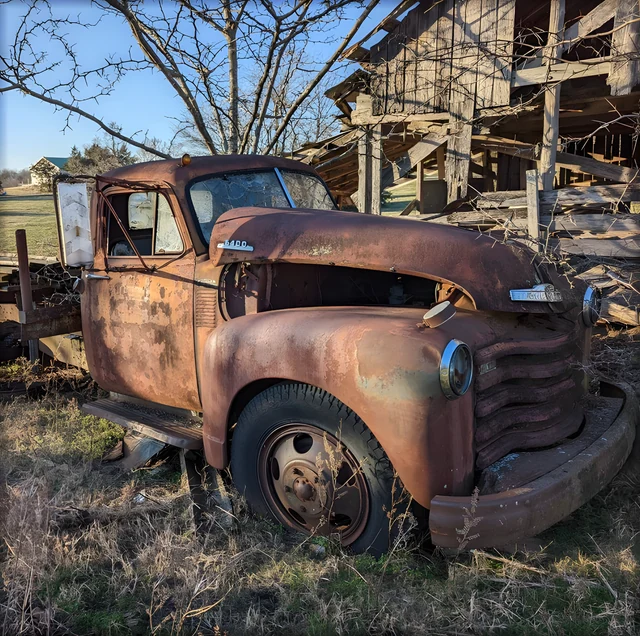
KMO talks with Peter, the author of the Toxic Plants blog, about how and when he came to take peak oil and the prospect for economic collapse seriously and the preparations he has taken to ensure that his family is better positioned to weather the breakdown of the economy and global supply lines than most people.
Open the formatted reading edition →
Reading edition · Approved reading edition. Edited for punctuation, paragraphing, repeated words, fillers, and obvious transcription errors; long unpunctuated stretches of the machine transcript were repunctuated with an automated punctuation model and then checked by eye. Speaker attribution is based on conversational context; no full audio listen has been done, and a few short back-and-forth turns are marked as uncertain. Opinions and factual claims are the speakers’ own, as of January 2022. KMO’s editing inserts, recorded after the conversation, are marked as such. No Vault continuation is identified for this episode.
“If you speak the truth, have a foot in the stirrup.” — Opening quotation
KMOHello, and welcome to another installment of the C-Realm Podcast. I’m your host, KMO, and this is episode number 578, Closet Doomer, with guest Peter, the author of the Toxic Plants blog, prepared for release onto the World Wide Web on Sunday, January 30th, 2022. Now, I consider the C-Realm podcast, the free C-Realm podcast, to be a monthly podcast, but I realize some months go by and I don’t get one out, and sometimes I’ll get out two in a month, rarely three. But this is the first one for this month and also the first one for this year, so even though we’re near the end of January, Happy New Year. This episode’s going to be a lot like the last one, in that I’m going to be interviewing somebody who is a longtime listener to the C-Realm podcast. Now, the C in C-Realm stands for consciousness, but I sometimes joke that it stands for Canada, because a much larger percentage of the, at least the people that I hear from, are from Canada than one would expect for any, you know, international English-speaking audience. So something about the C-Realm has had a special appeal for Canadians, and hey, that’s great.
Speaker uncertainI’m often mistaken for Canadian while traveling abroad.
KMOBut in the previous episode, I interviewed somebody who was raised on doom, specifically religious doom, but it led to a very systematic and impressive level of organization in preparation for collapse on the part of his family. And he rejected all that and got interested in psychedelics and Terence McKenna, which led him to the Psychedelic Salon, which led him to the C-Realm, which led him back to doom. But then he went through the peak oil doom phase with me and came out of it. My next guest is somebody who I guess is still in it. He describes himself as a doomer, but he also knows that being a doomer and talking about doomer-ish topics can be off-putting to the normies. And so he kind of flies under the radar with it. He is a closet doomer. And I’ll start off by reading a long email from Peter, the author of the Toxic Plants blog, and I’ll get the URL for the blog wrong when I read the letter. It is toxicplantsblog.blogspot.com. So the word blog, appears twice in the URL. All right, so here is my conversation recorded just this morning with Peter of the Toxic Plants blog.
Program identification: “You’re listening to the C-Realm Podcast. C stands for consciousness.”
KMOSo, Peter, you contacted me, and I think it might be useful just for me to read the email that you sent me. Share that with the listeners. Is that all right?
PeterYep.
KMOThis was back on December 21st last year.
PeterYeah.
KMOYou wrote to me and you said:
Hi, KMO. I was interested to listen to your latest podcast with James, and it set me thinking about doomerism generally. Like James, I’ve been a longtime follower of your podcast, and you might have a record of me from 2010 or thereabouts. You played a short audio clip for me on your podcast, and we may have exchanged emails at one point. I was probably using my Canadian email address at the time. I’ve since seen the light and emigrated from Canada back to my home country of the British Isles. I’m now living on the Isle of Man, a small island of 88,000 people in the middle of the Irish Sea and practicing as a general medical practitioner slash family physician here. But anyway, back to the doomerism. I discovered peak oil in 2008, just before the oil price spike and financial crash of that year. And like a great many other people, I thought everything was going to fall apart in short order and started following people like you, James Kunstler, Chris Martenson, Dmitry Orlov, and John Michael Greer.
Fast forward 13 years, it has been, and quite a lot has changed. The anticipated collapse hasn’t happened yet. You now describe yourself as an ex-doomer. Jim Kunstler now writes mostly about American politics, which I’m not particularly interested in. Good on you for that. Chris Martenson seems to have got obsessed with COVID and anti-vaccination, and Dmitry Orlov became increasingly anti-American and went back to Russia. John Michael Greer’s position hasn’t changed much. He was then and is now talking about a long, slow, stair-step style of collapse lasting hundreds of years, and I think he’s probably right. My position hasn’t changed much in the last 13 years either. I was then and am now a closet doomer. I think there probably is going to be a societal collapse, probably slow, but could be fast and take us by surprise, and I think one should make sensible preparations for it.
However, I learned very early on that there is no point trying to talk to people about this because it’s well outside the Overton window of acceptable topics in conversation, and if you try to raise it, people just think you’re weird. They don’t disagree with you or put forward rational counter-arguments, they just dismiss you as weird and therefore not worth engaging with. So I take my preparations quietly, without discussing them with my wife, my medical co-workers, my patients, or anyone else. I’m learning to grow food, aka gardening, which is widely accepted as a non-weird activity. I’m also learning to grow toxic plants including mandrake, opium poppies, henbane, jimson weed, and deadly nightshade with a view to reinventing slash rediscovering the general anesthetics which were used in ancient Greek, Roman, and medieval times. This is definitely on the wrong side of weird, and if anyone asks me, what’s that you’re growing?
I just tell them, that’s my wildflower garden, which is sort of true and avoids a lot of difficult explanations. I have an electronic library of about 10,000 self-sufficiency books downloaded cheap or free from the internet, with a means of accessing them in the event of a grid failure. These include several hundred medical books of the remote and austere medicine variety. I have a small amount of gold and silver. I even have a small Geiger counter, which I hope I will never have to use. So it’s possible to be a closet doomer for minimal cost and still live an outwardly completely normal and respectable life. If you ever want to have a debate with me on your podcast as to why one should or should not be a doomer, I’d be very happy to take part. But as you’re now an ex-doomer, I can fully understand that’s probably not a direction you want to go in. Anyway, good luck. Thanks for all those podcasts. And if you get the time, you might visit my blog, toxicplants.blogspot.com. All the best, Peter.
KMOAll right. So that’s a little bit more than a month old. Is there any addition or amendment you’d make to that correspondence now?
PeterNo, except the address of the blog is toxicplantsblog at blogspot.com, if anyone wants to visit it.
KMOI will put a link to that in the show notes for this episode. So I’m not particularly interested in a debate, but I’m certainly interested in hearing your point of view as to why you think preparing for sudden collapse is worth doing.
PeterWell, it might be helpful if I explain how I got into this whole peak oil and collapse thing in the first place. It really happened, as I said, in 2008. Up until then, I really didn’t take any notice of the energy supply situation, the economy or anything like that. I just assumed that, you know, like most other people, the government had our backs and they knew what they were doing. The economists would adjust interest rates to keep the economy stable. If we started to run out of oil, we’d find another energy supply and so on. In 2008, two things happened to radically change that. The first thing was that at the time I was living in a small town in Canada and there was a weekly newspaper. And at the back of the weekly the newspaper, every week there was a column by a local, I guess, eccentric guy that the editor had taken under his wing.
And week after week, this guy wrote about peak oil. And I found his column amusing, interesting. So I read it every week, but didn’t really take much notice of it until February of 2008, when he said, there’s going to be a crash, an economic crash in September this year, you need to get your money out of the stock market, buy gold, buy cash, pay off your debts, and just prepare for the worst. And I was puzzled by this because I hadn’t heard anything about it from the government or in the mainstream media or from any official sources. So I just kind of mentally filed it away and forgot about it. But come September, it happened just like he said it was going to be, you know, there was an economic crash that’s kicked off the Great Recession and the rest, as they say, is history.
And I was astonished. I couldn’t work out how he knew. I mean, how could you possibly know in February that that was going to happen in September? Was it just that he predicted collapse so often that if you do something often enough, you eventually turn out to be right? Or did he actually have sources of information that weren’t apparent, you know, weren’t broadcast on the usual media channels? So at that point I started looking into peak oil a bit more, because it sounded as though maybe it’s something that I should be taking seriously. Now, that was one thing. The other thing that happened is we have a seriously disabled son and I was looking into setting up a trust fund for him because we expect him to have a normal life expectancy, in which case it’s quite possible that he might outlive us. So you know we want to have some money put aside to provide for him.
So I was crunching some numbers and thinking how much money would I have to put into this trust fund, to set it up, and how would it grow? And I thought, well, the current rate of economic growth in the country is about 3% at the moment. So let’s see how much the economy would grow over his lifetime. And I did a back-of-the-envelope calculation. And the figure that I came up with was 10 times. So over his lifetime of 80 years, let’s say, we would have to increase consumption and production by a factor of 10 over what it is now. And that just didn’t seem to make any sense to me. So I thought maybe I’d got the arithmetic wrong. So I tried it again with the calculator — same result. Tried it again on my laptop — same result. I just kept coming up with this factor of 10 and of course that’s only over one lifetime.
If you do it over two lifetimes you end up with the economy growing by a factor of 100 and so on. So I wrote to the government think tank which was in charge of doing economic forecasts, and I said, look, I’ve got this problem here. Can you help me with it? I’ve come up with these figures. Is this what you expect to happen? And they wouldn’t answer the question. I got the impression that either they didn’t want to go there because they didn’t like the answer or they actually didn’t understand what I was asking. So that really I think told me that there was something wrong and the people in charge maybe didn’t know what they were doing and maybe I really, really should look into it. So over the next couple of years I looked into it I went down various rabbit holes I started listening to yourself Dmitry Orlov, Jim Kunstler, Chris Martenson and so on, and after two years of that I finally got it straight, I think, and came to some conclusions about what was happening.
The conclusions I came to were that some kind of collapse or severe contraction is probably inevitable because the way our society works at the moment is unsustainable. It’s totally dependent on a continuing supply of fossil fuels which are going to either run out or become economically non-viable at some point. And it’s also dependent on continual economic growth, which, again, is unsustainable over the long term. I also realise that nobody really knows what sort of timescale this is going to happen over or what it’s going to look like. It’s most likely going to be a kind of ragged, fairly disorganised contraction, one step forward, two steps back sort of thing. It’s likely, I think, to be patchy, so it’s going to affect first the people who are already marginal, already struggling. People like me who are relatively well off will be, I think, spared for a longer time.
But eventually the collapse will come to us as well, and geographically it’s likely to come to poor countries before rich countries. So that’s probably why you’re seeing a lot of migration at the moment from Mexico to the United States and from the Middle East into Europe and so on. It’s probably the early stages of what’s going to become a much bigger problem as the years go on.
KMOWell, let me just interject some details about the local scene here. It’s my understanding that most of the people crossing the Mexican border into the United States are not themselves Mexicans. The Mexican economy is pretty strong, and it is well-coordinated with the United States. I mean, a lot of people in the United States are using products that were assembled in Mexico. It’s people from further south in Central America traveling through Mexico to get to the United States. And I know you’re not interested in American politics, but there are forces here in the United States which are encouraging people to make that trek. And you know, for political reasons, for political gain for their faction. But let’s not take that detour. Let me ask you just to repeat, in a sort of condensed fashion, what it was you were— you were making calculations as to how much you would have to invest in order for your son to be looked after after you pass. Yeah, what was it about that? That didn’t add up for you?
PeterWell, I just figured that if I wanted to set up a trust fund and I wanted the trust fund to grow, it’s only going to grow if the wider economy is also growing, which I think is probably true. So that was why I started looking at how much the economy would have to grow and was it feasible for it to continue growing indefinitely. And I just came to the conclusion that it wasn’t. It’s not going to continue growing indefinitely because it’s physically and mathematically impossible.
KMOBut there are certainly investments you could have made, though, at that time, which would not only support your son for his lifetime, but basically your descendants for many generations. And, you know, those I’m thinking, for example, if you had put a thousand dollars into Bitcoin in 2009, you would be a billionaire. It doesn’t require that the amount of fossil fuel in the ground expands, it doesn’t really require that any more energy from the sun is reaching the earth. And you know I’m not claiming it’s any sort of panacea, but just [wording unclear] I’m having trouble getting from I need to invest to support my son in the future to the economy is going to collapse. It’s a stretch from my perspective. So I would need, I mean if. If this were a debate, I would need some more selling on that point.
PeterSure. Yeah. Well, like I said earlier, I’m not expecting a rapid collapse, but I don’t think that putting money in the stock market is likely to be a good investment over a long period of time, as it was, for instance, in the earlier years of the 20th century. So, for example, my mother invested some funds in the stock market in order to pay for her retirement home. Now those lost value, and they’re only just now starting to come up to their previous value. At one time, the stock market was viewed as a secure investment. You know, you put your money on blue chip stocks, and you could be assured of having a good return for decades to come. But I don’t think you can say that anymore.
KMOWell, I think of the Jim Kunstler’s yearly forecast. In his most recent yearly forecast, he predicted the price of gold. And I don’t actually remember what price he predicted for the end of 2022, but I decided to go and get a 10-year graph of how the price of gold has fluctuated and then put an extra cell on that graph, you know, an extra year to accommodate Jim’s prediction. And I had to triple the height of the image file in order to accommodate his prediction. And I will be extremely surprised if his prediction comes true. You know, if the price of gold hits an unprecedented all-time high, historically speaking, I mean, not just a new high, but something which is an order of magnitude off the chart, off of the path that it has taken over the past 10 years, I would just be really surprised.
I mean, I’ve been listening to people talk about the impending collapse for, as you say, a decade and a half now, and it just hasn’t panned out. And I’ve lost interest in predictions of dramatic swings like that. And the hundred year or multi-century stair-step decline, it’s really hard to hold one’s interest. Now, I think you have threaded the needle in that, and this is, I’m still in touch with people who are advising young people to quit their jobs and move to the country and start farming. And that is a recipe for lifetime financial crippling pain you live in a society. You live in a society which runs on fossil fuel energy and which has certain expectations of you that assume that you will be, you know, taking advantage of the tools that this technological society presents to you. And if you try to go to the country and you know, grow beans or what have you, or even if you know, you’ve been reading a lot and you know about polyculture and you know about permaculture and you know about mixed use agriculture, and you’ve got all that in your head.
It takes a very long time, decades, to work it out so that it works financially. People who grew up in a non-technological society, an agricultural-based society, grew up in such a society where the institutions and the practices and the cultural knowledge were all well-established, and they just took the baton from somebody who was navigating that landscape competently because they had been raised in it. But to try to move from a standard off the shelf, haven’t thought about it, just did what was expected of me, existence, to living off the land, it takes an exceptional amount of work and intelligence and discipline and luck, really, to make it happen. The one person that I know who actually made that transition and did it well was doing extremely well in financial services. I mean, he had business acumen. He was a French guy. He lives here in Arkansas.
And he took a substantial nest egg and very just excellent business skills, married it to his love of gardening, created a, you know, a workable homestead farm and created a business where he was distributing his, you know, his produce to various restaurants and farmers markets and things like that. I tried to replicate his operation and couldn’t. I just didn’t have his financial acumen. And I say that he’s the one success that I knew, but then he got divorced and lost it all, and he’s starting over at square one. So even the Superman, who could potentially be a celebrity polyculture person like Joel Salatin, even he is susceptible to just the modern world. It’s really hard to divorce. So I say you’ve threaded the needle in that I tell people if you’re really interested in this stuff and you really want to prepare for collapse, find something that you can do which makes sense and which improves your life, even if society doesn’t collapse.
And you’re gardening and you’re getting interested in the archaic use of plants and freeing yourself from dependence on medical supplies, which might come from China or someplace far away that would be suddenly unavailable to you, should international supply lines break down. And I imagine that’s quite fulfilling for you. And even if the society is pretty much intact, by the time you leave this earth, you will have lived a good life. And I find that admirable. But I’m very wary of ringing the alarm bell saying, get back to the land, get back to the land now, you know, because the lights are about to go out. It’s just, in my experience, you know, given the life path that I’ve taken with this podcast and the people that it has brought me into contact with, people who jump when they hear that alarm, it make their situations worse.
So I just, I advise people to, you know, if you’re taking in all this information about collapse and it’s coming in the context of, you know, attention grabbing fear, do your best to disconnect from that fear and engage with it intellectually and make plans and consider how you might incorporate some of this information into your life in a way that doesn’t cripple you financially.
PeterI would absolutely agree with that. I enjoy my gardening, but I do my gardening in my spare time. And in my nine to five life, I have a completely conventional job earning quite a good salary, and I have a pension coming to me at the end of that. So I suppose what I would like to do is instill a little bit of self-reliance in my kids. I mean, I have a 14 year old and he enjoys helping me with the gardening. He more enjoys the eating part of it than you know, the spreading horse manure and weeding all that sort of thing. But I’d like to think that maybe in 30 or 40 years' time, if he is ever in a position where he needs to start growing his own food, you might think, oh, well, I remember my old dad used to spread horse manure on the vegetable patch. I guess that’s what I need to do. And well, I’m just hoping that he picks up a few practical tips.
KMOI have recently moved from Vermont to Arkansas. And I don’t expect you to know a lot about Arkansas. I had to do some reading on the Isle of Man. I couldn’t say I knew much about it other than where it was based on your email. And so this is a part of the country. I mean, I live at my mom’s place now and she’s on 10 acres and she has several, I guess about 30 cattle here, not on 10 acres. There’s a couple of different properties nearby. We have a big garden space, but most of our food comes from the store. And I don’t save seed. I don’t have any horses. For me, horses are rich people toys. Working people drive cars because that’s what’s affordable. Horses are very expensive and very delicate. They’re strong and they can hurt you, but they also require a lot of care.
And veterinary care is a lot cheaper here than it is on the coast, but it’s still non-trivial. So like horse manure, horse manure would be something that I get in a car to drive someplace to buy from somebody. They’d probably load it into the back of my truck with a backhoe or something smaller, but similar, fossil fuel powered. It’s a boutique thing in our current context to fertilize your garden with horse manure.
PeterYes, I don’t have horses either. I get my horse manure the same way you would. I drove my car to a horse farm and just shoveled it in. It’s a good way of getting to know the neighbors.
KMONow, if you live in a place where there are stables around, yeah, that’s great. When I lived in Arkansas previously, I did get horse manure from the University of Arkansas. They had an equestrian program and they had a big stable and they would clean out their stables for the winter and put all the horse manure in a big pile. And it was gone within a day. People who knew that that was available, that that was a resource, they flocked to it, you know, it was gone, but it’s not, you know, the world that we live in doesn’t offer ample horse manure. Like, you know, I lived in New York city for a time and in New York city, particularly in Brooklyn, there’s a very distinctive architecture, these houses called brownstones where there’s no entry at street level. There’s two sets of stairs. One set of stairs goes up, the other set of stairs goes down.
The set of stairs that went down, traditionally, when the buildings were built, that’s where the servants lived. And the owners lived, you know, they took the stairs that went up. But they didn’t want any street level access, because the streets were full of horse manure.
PeterOne thing that puzzles me, actually, is vertical farming. You know, I’ve read a few articles about how we’re going to have green buildings and we’re going to grow plants in the buildings, and I’m just wondering how people are planning to get their farmyard manure up to the 20th floor of the — you know, one of these green buildings, I think. I think one of the advantages of growing your own food is not so much the food you produce, but you learn about what’s practical and what’s not practical. And you know, there are lots of reasons why a green building isn’t going to work. You know, the horse manure issue being one of them. And I sometimes think that people who talk about the you know the green buildings and the renewable energy we’re going to have in the future, they — I just wonder how much hands-on experience they’ve had with these things.
KMOWell, presumably somebody who’s, you know, designing a green— you know, a vertical farm isn’t planning to have people carry buckets of horse manure up to the 100th floor. More likely, those will be hydroponic operations where they’re just pumping nutrient-rich water and other liquid medium up to their dry, sterile medium where their plants are rooted. Or it’ll be an aeroponic situation where there’s just a minimal amount of soil, which again is fertilized with a liquid fertilizer, probably a synthetic fertilizer of some sort. Horses are not particularly efficient in their digestion. Most of what comes out of their butt is grass. You can still see the texture of it. It’s certainly not an industrial input. If you’re looking to concentrate the nitrogen, the potassium, and the phosphorus and get it to your plants, horse manure is not an ideal medium, but the fact that it does come free out of the butt of a horse in pre-industrial times made it very plentiful, available, close to hand, and very workable.
There’s an old trick here in Arkansas of feeding tomatoes to your horses, and horses, when they’re in a pasture, they tend to stick near the fences, and so there’ll be a buildup of horse manure in the fences, and tomatoes will just grow right up out of the horse manure. And because it’s near a fence, they use the fence as a trellis. So just feeding your horses a few tomatoes at the right time of year can get you volunteer tomatoes along your fence line next year. But again, horses are rich people toys. There’s just not that many of them around. I’m looking at a horse barn right now, right out my window, but there’s no horses in it. That barn is as old as I am. And I remember when there were horses in it. But that was a different, you know a different context.
PeterYeah, oh well, I guess, if you can’t get horse manure, you could maybe make do with cow manure.
KMOYeah, cow manure is not— it’s not the same magical stuff, though. You know what comes out of the back of a horse is is solid but light. You know it’s not very dense. As I say, it’s mostly grass. You can see the structure of the grass. You know if you’re feeding your horse corn or some sort of grain, you won’t see that. But if you’re feeding them hay in the winter or if they’re just grazing on grass in the summertime, you can see what they’ve been eating. It’s not the same with the cow. What comes out of the back of a cow is next to liquid. Yeah. It’s not easily collected. It’s, it doesn’t have that beautiful structure that, you know, lends to the loaminess of your soil. It’s just kind of nasty. It’s, I mean, it will reabsorb back into the ground and, you know, the nutrients will fertilize the pasture, but it’s not the magical ingredient that horse manure is for gardening.
Speaker uncertainWhat is [wording unclear] rabbit manure. Seagull droppings are good.
Speaker uncertainWhat is it?
Speaker uncertainYes, seagull droppings, if they’re good, or bird droppings.
Explanatory insert(KMO, in an editing insert) All right, I’m going to break in here because in the full recording of this conversation, I went on for several minutes, basically just relaying information from Charles C. Mann’s book, 1493, talking about the effects of crops from the New World being transported back to Europe, and also the effect of the discovery of guano, or bird poop, as a fertilizer and how there were big islands off the coast of South America that provided a lot of that. I went on at length. I’m cutting it out because I talked more than the guest in this episode, which is really bad form for an interview-based show. And I also have a bit of a political rant coming up, which I’m going to leave in. So basically just tightening up by removing my own overly loquacious portions of the conversation. If you’re interested in the topic and you want more information, I would suggest going to YouTube, search for, oh, bird guano and Charles C. Mann. Mann has two N’s in it. All right. And back to the conversation with Peter of the Toxic Plants blog.
Program identification: “On the C-Realm podcast, a mind that is stretched by a new experience can never go back to its old dimensions.”
PeterYes, well, I guess we could chat about fertilizer all day.
KMOWell, let’s talk about the global response to climate change. Your most recent blog post is a discussion of, what are they up to, COP26, 27?
PeterYeah, yeah.
KMOWhich one is it?
PeterI think it’s COP26.
KMO26th. Okay. Is that right? Yeah, COP26. So COP is the convening of the parties.1 It’s where people who have an interest in climate change fly from all over the world to gather in a particular place to talk about climate change and generally don’t do anything. And typically, famously, in fact, the United States has scuttled incipient agreements in the past. Hillary Clinton famously did so, I think in, well, when she was Secretary of State of the United States. And I didn’t follow, I’m just not interested in that level of conversation about climate change anymore. But in reading your description, it sounds like China was the designated party to make sure that nothing got done this time around.
PeterYeah. To be honest, I haven’t been that interested in following it either, because I just think it’s all hot air and we’re not, I don’t think there’s the willpower to do anything serious about climate change. I think we missed the chance back in the 1950s and 60s when we could have taken a different direction, but instead of which we built a whole load of car dependent stuff like freeways and strip malls and suburbs. And we can’t walk back on that. I also think that this idea that we’re going to be carbon neutral by 2050 is unrealistic. I don’t see a realistic plan for changing out fossil fuels and swapping in wind and solar and nuclear. I know there’s a lot of talk about it, but I mean to give you a practical example. I’ve got a solar panel which is about four feet by three feet, so it’s a reasonable size and it will quite happily power a laptop computer or an electric lawnmower or you know some small appliances like that.
It will not power my electric car because it would take probably about two weeks for the solar panel to charge up the car, because there’s a mismatch between the tiny trickle of electricity that comes out of the panel and the big capacity of the car’s battery. If people are saying, well, by 2050 we’re going to swap out every single gasoline and diesel powered car on the planet and replace them with electric cars powered by solar and wind, I just can’t see it. I don’t think it’s possible now. So I think at some point these aspirations are going to come head to head with reality and people are going to realize, you know we can’t do this. I think eventually we are going to become carbon neutral, but it’s not going to look anything like people think it’s going to look like. It’s going to be a very low energy society it’s going to be low energy input and low energy usage. It’s not just going to be a carbon copy of what we have now, but powered by renewables.
KMOYes. I agree with what you say, although I probably have different imagery in mind when I visualize that society. Moving something the size of a car in order to transport one person and a couple of bags of groceries is absurd. And energy efficiency is not going to advance to the point to make that sensible. But say in computer technology, you know, the more we miniaturize things, the less electricity they use. This laptop that I’m using is like six years old now, and it’s probably an enormous energy hog compared to this device.
Explanatory insert(KMO, in an editing insert) All right. And here, this didn’t really work so well for an audio podcast. The laptop computer that I use for podcasting is one that I got in 2015. It is an Asus Republic of Gamers laptop. I forget who said it, but it stuck with me. Laptops are not mobile. They’re nomadic. You know, like a yurt. You can tear it down, move it someplace else, and set it up again in the way that you can’t do with a stick-built house, but it’s not a camper trailer by any stretch. And the same is true of laptop computers. Yeah, they’re more mobile than a big desktop setup, but they’re not particularly mobile. So I was comparing my Asus Republic of Gamers laptop, and then I pick up my Microsoft Surface Pro 5, which is basically a tablet computer with a detachable keyboard. And it is much newer than the Asus laptop, and it uses less energy, although I’m kind of conflating two different phenomena with this example.
So reading from the website greentechmedia.com, historically, improvements in energy efficiency have largely come as a byproduct of Moore’s law, the doubling of the number of transistors on a chip about every two years through ever-smaller circuitry. Historically, as transistors become smaller, power efficiency improved in tandem with processor speed. So the increasing of computer power via Moore’s law also, as a byproduct, brought with it a decrease in the amount of electricity that those devices used compared to their predecessors. But with the example of the Surface Pro, it is a truly mobile device, unlike just a simply nomadic laptop. And mobile devices, you know, which run on batteries and are often, you know, you often can’t plug them in to recharge them when you need to. Battery life and energy efficiency are high priorities in the engineering stage, you know, in the design stage. So the energy efficiency of my Surface Pro is due to more than just, you know, a natural byproduct of Moore’s law. Moore’s law, as we all know, isn’t what it used to be. All right, now back to the conversation with Peter.
KMOFar less electricity. So I think the, you know, the online world, the abstract sort of second world that we’re building and increasingly inhabiting is got legs in the way that personal automobiles do not, which I’m not saying is necessarily a good thing. I think that the more we abstract and, you know, divorce ourselves from physical reality and lose ourselves in abstractions, the crazier we get, you know, and the less happy we are. So I’m not saying that’s a good thing, but I’m also saying if you’re planning — for a time, there was a current in the peak oil subculture where people were saying, peak oil is actually going to save us from climate change. We’re going to burn all the fossil fuels, and then we won’t be able to continually increase atmospheric carbon. And it’s just not playing out that way. It turns out that the peak oil people, when they said the oil’s half gone, what they meant was the oil that’s close enough to the surface and under enough geological pressure that it basically comes to the surface just when you poke a hole in it.
Yeah, we’ve used about half [wording unclear; heard “hat”] that stuff, but that’s the icing on the cake. There’s a lot more hydrocarbon embedded in the crust of the earth than just that stuff. And as we deplete the super easy, high-quality, very concentrated [wording unclear; heard “treated”] icing off the cake and we start to get down into the cake, we find that there’s a lot there. And so we cannot wait for collapse to curtail our habits. It’s not going to come in time. I remember when I was first getting into peak oil, everybody who was a celebrity in that subculture was talking about how fracking would never scale up. And I never heard any mention from them of advances in like seismology, using sound waves to become more precise in locating particular pockets of extractable hydrocarbons. They weren’t interested in the fact that the information revolution, which is making computers more powerful across a vast spectrum of uses applied to this as well.
It just didn’t fit their narrative. They weren’t interested, but here we are in 2022 and they’re still pulling stuff out of the ground. You know, and you can say it’s not economically viable, but it’s necessary. So, you know, the government sponsors all kinds of necessary activities that don’t necessarily pay for themselves. So I’m just, you know, all of the rationalizations and all of the narrative sort of loops that I’ve become familiar with really seem to be designed to exclude any sort of, you know, input that would disrupt them. You know, it’s basically confirmation bias, but in a very sophisticated sort of practiced method. You know, it’s not the standard sort of unconscious confirmation bias that everybody engages in. You know, that’s what we do as humans. We look for the evidence that confirms our belief system rather than the, you know, the mismatched evidence that would cause us to go back to the drawing board and re-examine our premises.
But, you know, if you are a celebrity in a particular field, you know, if you are preaching to a particular choir, you get very sophisticated at incorporating lots of new information and, you know, discrediting anything that would lean against it or, you know, push back against it. And I’ve spent so long in the peak oil community and I got so attuned to these maneuvers that I just, you know, I saw them everywhere. And I saw the mentality of the people who would show up at these meetings, you know, not the people who were being paid to present, but the people who were paying money to come and hear this message. And there was a clear psychological pathology at work there. And I’m not a clinician, and I certainly don’t diagnose people with mental illness, but the people who were showing up for these things time and again, and I was one of them, they had an unfulfilled need.
And it wasn’t a need for hydrocarbon energy. It was a psychological need. It was a social need. And you could point back to the fact to say, yeah, our technologically mediated, energy-driven, largely abstract culture that we live in is not satisfying to us in the way that previously low-tech, long-standing, evolved cultures were. And I agree with that. But it doesn’t lend any credence to the notion of impending collapse. And I’m at the point now where I appreciate I’ve probably overcorrected. I’m probably less interested in hearing nuanced, sophisticated arguments for thinking that society is not particularly resilient. But it just seems to me I’ve wasted a very important chunk of my life chasing this dark fantasy. And to me, collapse is a fantasy, you know, and it’s a romantic fantasy of all the things that cause me continual stress that I can’t do anything about are going to go away.
And all I’ll have to worry about is staying alive, you know, which is a fantasy for a lot of people. I think it’s why the zombie apocalypse, you know, narrative structure was so popular for so long. You know, it told people, look, all this life that you hate, that is so oppressive to you, that seems, it seems unassailable. It could fall in a moment. And you will live a life of, you know, tooth and nail. You know, what’s the Hobbesian phrase?
Speaker uncertainNasty, brutish and short.
KMOYes, yes. So you know, I’ve, yes, I’ve publicly rejected that whole, you know that whole psychological profile, and you know, to my great detriment as a podcaster, because that’s what people were interested in. That’s what most of my audience wanted to hear was that things are about to fall apart. And when I, when I stopped reinforcing that, they said, I’m going to go someplace else and find somebody who’s going to tell me what I want to hear.
PeterYeah, well, I’m not anticipating a rapid collapse, unless some idiot starts, you know, firing off missiles over Ukraine or something like that. So it’s more likely going to be a very slow process. But here in Europe, in the UK in particular, we are seeing a gradual shift in geopolitics as a result of oil declining. So I mean the situation is different in the USA, where you have extensive fracking going on. We’re not fracking in the UK, but our North Sea oil and gas fields started declining about 20 years ago. They’ve been in gradual decline ever since. So now we’re buying in, I understand, quite a bit of our gas from Russia, and I think that’s a story that’s not going to end well, bearing in mind, you know, Russia’s geopolitical stance at the moment, like you know all the trouble with the troops massing on Ukraine’s borders.
On the one hand, the UK is saying to Russia, you can’t do that or we’ll apply sanctions, but on the other hand, if we’re dependent on Russian gas, it reduces our room for maneuver and I can see that getting worse in the next two or three decades.
KMOI think I can see that getting worse in the next two or three hours. Yeah, yeah, of all the existential threats, nuclear war is certainly one that can play out later today, you know. I mean there could be a massive CME event, coronal mass ejection, you know, which would completely take out the electric grid on half the planet. That could happen at any time, but it likely won’t. Statistically speaking, it probably won’t in our lifetimes. Under Yellowstone National Park, there is an enormous super volcano which could erupt at any time. If it erupts today, I will be dead later today. But that happens frequently on a geological timescale, but in terms of human lives, it’s unlikely to happen. But yeah, nuclear war, that could happen before the end of this call. That’s something we need to be very cautious of. And you’re not in the United States, so you’re not a witness to the intense beating of the war drums that are happening right now.
The Democrats have spent the last six years saying that Donald Trump is Hitler and that we narrowly escaped concentration camps with the 2020 election. And if he comes back, we’re going to have concentration camps. And he was controlled by Russia. And Russia is, you know, is the big evil. And, you know, we have to be really militarily aggressive and responding to what they’re doing on the border of Ukraine. You know, there’s a huge difference between bullying Iraq, which, you know, we said was working on and getting nuclear weapons when they weren’t and, you know, challenging a country which has an existing nuclear arsenal with intercontinental ballistic missiles, you know, with your big cities already targeted. That to me is insanity. So yeah, that’s a dire threat that I take very seriously, but there’s not a damn thing I can do about it. But I grew up in the Cold War, as did you. So we lived under the threat of constant nuclear annihilation, and here we are. I’ll stop talking. I realize I’m doing most of the talking, so go ahead.
PeterNo, no, that’s fine. Well, I guess one just has to hope that there are sufficient adults in the room that people will be sensible and go to the brink, but not beyond the brink?
KMOYeah, I mean, I think that Russia will pick away at Ukraine. I think they would like to occupy their former, you know, the borders of the former Soviet Union, because they’re much easier to defend than just the borders of Russia. You know, there’s really there’s no mountain range or rivers or anything that really marks out the territory of Russia and makes it easily defensible. You know, the Soviet Union, their geo or their geographic footprint was much easier to defend. So I think they will over time try to expand, to reoccupy that footprint, but they don’t really have the people for it. You know, they’ve forgotten how to have babies in Russia. So there are, there are growing ethnic populations in Russia, but the — you know, the people that we think of as Russian, they are declining. So the clock is ticking for them. You know, whatever endeavor or whatever goals they have in mind, they have time pressure. They need to get to it, which creates instability.
PeterSo you mentioned Donald Trump earlier. I’ve not been following American politics, but I understand Donald Trump is still lurking in the background. Do you think he’s likely to make a comeback as the next U.S. President?
KMOI’d say it depends on his health. He’s an elderly gentleman and he’s not known for healthy lifestyle habits. So, you know, there are people who smoke cigarettes and drink hard liquor and eat junk food and lived into their 90s. And Donald Trump only does one of those. He’s a teetotaler and he doesn’t smoke, but he’s known for, you know, his fast food habits and he’s certainly not slender. But, yeah, I think if he decides to run, almost nobody will challenge him for the Republican nomination. And Joe Biden, I didn’t vote for him. I didn’t think he was qualified. But I think that the, you know, the hatred that he’s enduring now from his own party is unjustified. You know, I have no animus toward the man, really. I just think he was not, you know, neurologically capable of taking on the challenge of being the president of the United States.
And it was clear during the campaign, you know, he just wasn’t campaigning. It had had it not been for COVID and the lockdowns, you know, which allowed him to not have to campaign like a normal candidate would, it would have been clear that he was not up to the task. And, you know, to me, it was already clear. I mean, his handlers, he couldn’t, he couldn’t maintain his composure in the face of any sort of pushback from anybody whatsoever. And he would, he would just snap and yell at people and insult people. I remember there was a campaign event where a portly gentleman asked Joe Biden a very, a very reasonable question and Joe Biden snapped back and just started shaming him for being fat, said, look, fat, you know. He called him fat, you know, as if his name was fat, and he said, why don’t we do a— why don’t we have a push-up contest and see who can do more push-ups?
He wasn’t, you know, this guy wasn’t rude. This was a Democrat at a Democratic event. You know, talking to one of the potential Democratic nominees, it wasn’t, you know a hostile attack from a Republican. So, you know, from my perspective, the fact that Joe Biden has pulled the United States out of Afghanistan, regardless of how incompetently, from my perspective, great. My oldest child is 21 years old. The United States has been at war his entire life. So like I say, I didn’t support him, didn’t want him to be president. But I think that the hatred directed at Joe Biden now is unhinged. But so much of our cultural political conversation here is utterly unhinged.
PeterI know. Well, politics in the US seems to be much more polarised than it is in the UK. At least in the UK, members of parliament can still have a civil conversation with each other across the two sides of the house. But as you’ve probably heard, our prime minister is in a bit of trouble at the moment over lockdown parties. So we’re not quite sure how that’s going to work out.
Program identification: “You’re listening to the C-Realm podcast with your host, KMO.”
Explanatory insert(KMO, in an editing insert) All righty. Here is a political rant that I’m not leaving in the podcast. Largely, it’s just off topic. And again, the ratio of me speaking to the guest speaking was off. So I’m cutting this out. Y’all know I’m a politically, for the most part, a lifelong libertarian voter, although not dedicated to libertarian ideology. It’s mostly just, my flavor of protest vote. But for most of my life, I have been economically conservative, socially liberal, which puts me, at least when it comes to socializing with people, much more in the blue tribe than in the red tribe. And I’m not a Republican. I didn’t vote for Donald Trump. I don’t plan to if he runs again. But the blue tribe has lost its mind. It’s lost its freaking mind. And so, you know, most of the frustration that you hear about politics for me comes from observing the insanity on Team Blue.
That’s typically where I’m coming from with political rants these days. The details are not particularly important, so I’m cutting them out. Now, let’s push on to the conclusion of this conversation with Peter of the Toxic Plants blog.
KMOYou know, you were talking about convening of the parties, you know, the COP26 event. These things tend to be lavish. Wealthy people attend these events and wealthy people have certain lifestyle expectations. So it wasn’t a COP event. It was a different climate event that took place in the Mediterranean somewhere. John Michael Greer wrote about this, how they had a fleet of Lamborghinis at the ready. If the rich people wanted to just take a tour around the island in a fancy sports car. And so many private planes flew into this because the people who attend these events are fabulously wealthy, and they would never consider flying, you know, on a commercial jet. Even first class to them would be, you know, unacceptably close to the hoi polloi. And we get the, you know, the Economic Forum at Davos, you know, the World Economic Forum and Klaus Schwab, where the rich people gather together to say, obviously, we’re still going to live like gods, we’re going to have private jets, we’re going to have multiple homes around the world, we’re going to travel at will.
But the rest of the people, they’re a problem. They can’t live like us. We need to figure out how to sell to them a world in which we still get to live like gods, and they all live like medieval peasants. How can we make this attractive? And their messaging is so divorced from the mentality of the people whose reproduction and whose energy usage they want to diminish, you know, what comes out of their mouths and out of their typing fingers is just absurd. You know, it’s the phrase that has caught fire here in the last couple of years is, you will own nothing and you will be happy.
PeterI think they should take a leaf out of the British aristocracy from the, say, the 17th to the 19th centuries, because for about 300 years, well, probably longer than that, we had extremes of wealth and poverty. We had the aristocracy living in their mansions and we had the peasant farmers, tenant farmers who didn’t own anything. But they managed to coexist. I think the way the aristocracy managed to keep the lid on things for so long was by making themselves useful. So, for example, you know, they would employ local people in the big house, but they would also give a lot of their wealth to good causes like building hospitals and schools and churches, libraries, almshouses for poor people. And I think maybe that’s something that rich people need to seriously consider, because if you see a rich people swanning around the world from, you know, one mansion to another in their jet, but not really contributing anything, I think maybe they’re putting themselves in a more vulnerable position than they realize.
KMOJohn Michael Greer, he makes that point in his novel Retrotopia. Did you read that novel?
PeterI didn’t read the whole novel, but I’ve read a lot of his posts about it. I think he serialized it, didn’t he, on his blog?
KMOYeah, it started off as a series of blog posts, and then he collected it into a novel. I think if you read the blog post, you got the messaging, at least. There may have been some story details you didn’t get, but there’s a rich woman in the story who, you know, the character, the point of view character comes from the East Coast, which is, it’s basically our world projected into the future 20 or so years. And he’s come to a place where the government has deliberately and systematically adopted a low-tech lifestyle. And in the cities, there’s some electricity, there is some technology. And the further you get from the center of power, the more you move to the periphery, the less technology is allowed, but the lower your taxes … places [wording unclear]. And there’s a rich woman who I think her wealth comes from, she owns the company that makes trolley cars or cable cars, you know, a sustainable mass transit solution, which was in place here in the United States before World War II.
And after World War II, the auto industry bought up all the infrastructure and tore it out, you know, to make people buy cars. And she was talking about, yeah, her duty as a rich person is to employ a lot of people and to do a lot of favors for poor people, to basically systematically generate goodwill towards her because she knows if the poor people ever decide that they don’t like the rich people, there’s a lot more poor people than there are rich people. But the opposite side of that story is, I forget the source of this quote, but some industrial magnate of the early 20th century in the United States said, I can always hire half the poor people to kill the other half.
PeterYes. Well, that’s an interesting take on it. I think, though, people ought to remember what happened in the French Revolution. I like to think the British aristocracy handled it better than the French aristocracy.
KMOYeah, we just don’t have that cultural lesson at hand here in the United States. I mean, people love to talk about guillotines here, you know, and making guillotines and such. But the United States was founded by several different nations. Many of them came from the British Isles, but they were very different populations from the British Isles and also from Spain and France and Belgium. But we never really had, I mean, there were attempts to export the British aristocracy to this continent, and they sort of stuck in the Tidewater region near Washington, D.C., over on the East Coast. But for the most part, it was poor people being shipped over here in massive numbers. And a new aristocracy arose that wasn’t name-based, title-based, land-based. It was more economic. And so we just don’t have the same relationship to actual official aristocracy. We just never had that here.
What we have instead are like the richest people in the world now, they’re the founders of companies in industries that didn’t exist 30 years ago. You know, we have a new set of uber wealthy people, you know, people like Tim Cook or Jeff Bezos or Elon Musk or Bill Gates, you know, that they made money on industries that weren’t even industries at, you know, in the middle of the 20th century. So we have this sort of you’ve probably heard the expression that most Americans who are poor, just, you know, they consider themselves to be inconvenienced millionaires. They imagine that pretty soon their big break is going to come and they’re going to have a billion dollars. And when they have a billion dollars, they won’t want to pay taxes. They won’t want any limitations on what they can do with their land or how they can travel or how they can behave.
So, you know, they’re not going to impose those limitations on the people who just happen to be sitting in that privileged position right now. Whereas if you have a tradition of, you know, an aristocracy and people who are bound to the land, that mentality would be nonsensical. It’s nonsensical here. Statistically speaking, most people will never be billionaires, but there is that fantasy and there is that sort of, it serves as a psychological release valve.
PeterYeah. Yeah.
KMOAnyway, let’s talk about rats for a few minutes.
PeterYes. Yes.
KMOYou don’t say the word rat on the Isle of Man.
PeterThat’s right. We call them long tails. It’s a kind of superstition. We have a lot of them in the Isle of Man. So yes, a big problem with long tails. They have an incredible sense of smell and they can smell when my corn is just about ready to eat and they get in there a few days before I do and two years running they’ve stripped the whole lot of it. So I put out rat traps last year but felt a bit guilty about that because they didn’t catch any rats, but they could. They caught a whole lot of perfectly innocent garden birds like robins and blue tits and so on. So I think this year I’m going to do something a bit different. I’m just going to surround the corn by lots of wire netting and, you know, make it rat proof but harmless to other creatures.
KMOAre you familiar with the writer, Michael Pollan?
PeterYes yes.
KMOOne of his earlier books is about his adventures in gardening and he describes basically a war with a hedgehog and all of the measures that he took to try to protect his crops from the hedgehog, and they all failed. So he turned from protection to extermination. And he looks back with regret on how far his rivalry with the hedgehog led him down the path of employing any means possible to kill this animal.
PeterOh, dear. I think maybe you got the wrong culprit. I thought hedgehogs just ate slugs and snails. I didn’t think they ate crops.
KMOI’m sorry. Not hedgehog. Groundhog.
PeterGroundhog, right.
KMOMuch, much bigger animal, much more resilient, capable and destructive.
Speaker uncertainRight. Yes, hedgehogs are cute little things the size of your fist. No, hedgehog is very large, like a badger.
Speaker uncertainYeah, right, yeah, I got you now. Yes.
PeterWell, I think, growing your own food, you realize that it’s a constant battle to try and stop other critters eating your food and. And when you go into the supermarket and see shelves and shelves of perfect produce brought in by the farmer, you don’t realize that they only look perfect like that because they’ve been drenched with herbicides and pesticides and fertilizers. And, you know, when you try and grow your own stuff, it’s actually quite difficult.
KMOThe realization. One of the realizations that I get from gardening is just how resilient most plants are compared to the ones that we’re trying to cultivate. Yes, yes, you know there are plants that grow up through the cracks in the pavement. But then the one that you’re looking to cultivate, you’re, you know you’ve rolled out the red carpet for it. You know you’ve made the soil just the right consistency, with just the right drainage. You’re controlling how much water it’s getting. You’re eliminating competitor plants by physically pulling them out of the ground. And the things are still just such prima donnas. It’s like, oh no, too much heat, I will wither now.
PeterYeah, I know [wording unclear], yes. Well, yeah, I suppose it’s what you call gardening against nature, isn’t it? Yeah, you’re trying to grow plants that aren’t ideally adapted to the environment, and they’re. They’re competing with other plants, which are, it’s a, it’s a kind of losing battle, but yeah, I know what you mean.
KMOI think the real value of gardening is I mean, yes. If there is a collapse scenario, somebody who’s been gardening for 20 years will have a much better chance of, you know, raising some food for themselves, whether they can keep it or not is a different story. But you know, in a non-collapse scenario, if food is available at the store, but you’re still making an effort to grow it. You’re going to be a lot more physically fit because it’s work, but you’re also going to be a lot more cyclical. You’ll be, you know, different times of the year will be truly different. You’ll be eating different things at different times of the year. You’ll be engaged in different activities at different times of the year. Whereas if you play video games or just, you know, work on a computer from home, January is pretty much the same as July. You know, there’s just not that much difference. Maybe you have to shovel snow, but, you know, we have snowblowers for that.
PeterI think one of the advantages of gardening is getting to know your neighbors. I mean, from, oh, I guess June to September, I have a big surplus of produce and I give most of it away to people in the neighboring gardens, people at work, family. You know, I make jam. I give the jam away as Christmas gifts and it goes down well.
KMOWow. So you’re cultivating goodwill from the soil.
PeterYeah, yeah, that’s right. Yeah.
KMOI definitely know the phenomenon of suddenly I have more tomatoes than I know what to do with.
PeterYou’re lucky you can grow them. Tomatoes don’t grow very well in the Isle of Man. The climate’s too cold and damp.
KMOYes, and you’re very far north. You don’t get nearly as long a season.
PeterYes. We’re actually on the same latitude as Labrador in northern Canada, but the climate is much milder because we’re warmed by the Gulf Stream. So it’s more like a northern Mediterranean climate.
KMOI was reading in your most recent blog post about things that we need to do. And one of them is just stop using fossil fuels, full stop, which, as you say, is not going to happen. That’s really not among the list of options that anybody is considering. But another one was move to temperate places. But unfortunately, temperate places tend to be close to the ocean, and that’s the most expensive real estate you can find.
PeterYes. Well, I suppose you can still move inland to temperate places inland, but I guess the problem you’ve got there is that most people have already had the same idea, so you find those places are more crowded.
KMOYeah, inland tends to be like. I’m in Arkansas, which is near the very center of the continent, or at least center of the continental United States, and summers here are blisteringly hot and winters are extremely cold. You know it’s going to get above freezing today and well above freezing, but it will be the first time in a long time we’ve had just brutally, brutally cold weather here. So you know, once you get away from large bodies of water, you know moderate climate is a seasonal thing. Yeah, spring and fall is quite nice, but the rest of the year is brutal.
PeterOh right, yeah. Yeah, I’ve lived in Ontario and Canada, but I’ve never really lived in the interior of the big continent. I guess I’ve spent my most of my life on islands of one sort or another. So that water, which is so, so nice in terms of moderating the climate, yeah. Yeah, yeah, yeah, it is nice here, except for the salt winds. Quite a few plants are intolerant of salt winds and, you know, you just have to learn which those are and avoid them.
KMOSo what are some really salt tolerant plants that you’ve cultivated?
PeterWell, most plants will tolerate a fair degree of salt. It’s easier to list the ones that don’t like it. Wisteria, I mean, you know, decorative wisteria, the climbing plant. They’re practically indestructible in most places, but every time we had a storm and the wind blew in from the sea, all the leaves fell off mine. So that’s one thing, not to grow in the Isle of Man.
KMOYou know, all over the world there are places where rivers meet the sea and you get brackish water or you get water, you know, fresh water flowing into salt water, so you have different levels of salinity and there are plants growing throughout. So there are many plants, they’re halophytes, they’re salt-loving plants. And there was a time, and I haven’t heard much about it, where part of the suggested adaptation to not only climate change, but peak oil was to cultivate, deliberately cultivate a lot more halophytes, a lot more salt-loving plants. But I don’t know if that ever found much traction or, you know, found any really winning killer apps, as we’d say. You know success, successful use cases.
PeterYeah, it’s an interesting idea, but of course, things like corn and oats and barley and rice have been bred for about 10,000 years to be highly nutritious. I think, yes, it’d be very difficult to find a wild plant with the same nutrient content as the domesticated varieties.
KMOExactly. So yeah, well, I again. I realize I’ve done a lot of the talking on this call, so let me invite you to take as long as you want to say whatever you’d like you know to get your point across. You know, whatever message you would like to share with the C-Realm podcast audience. Please take as long as you’d like and I will not interrupt.
PeterOh, well, yeah. Final messages. Well, keep listening to KMO’s podcast. They’re worth their weight in gold.
KMOThey weigh nothing.
PeterIf you feel like visiting my blog, the address is toxicplantsblog at blogspot.com. I guess one final message, though. I know that a lot of listeners to the C-Realm are interested in, what’s the word, hallucinogenic plants. But just bear in mind that the plants that I talk about on my blog are not recreational plants. They’re highly toxic. The ones that I’m experimenting with have been used as anesthetics in times past, which means they’ll either make you unconscious or paralyze you, or quite likely kill you. So if you’re going to look for a psychedelic experience, don’t use those. Use something safer.
KMOYes, psilocybin mushrooms are super safe. You cannot overdose or poison yourself with them, as long as they actually are the mushrooms you think they are.
PeterSo I guess I’ve already said everything that I’d like to say. Thank you very much for inviting me onto your podcast.
KMOWell, thank you for contacting me, thank you for listening for so long, and maybe we can talk again.
PeterSure. Okay.
KMOAll right, have a good evening.
PeterYou too.
KMOThat was Peter of the Toxic Plants blog. If you go and check out his blog and leave a polite, respectful comment, you can say KMO sent me. All right, well, we’re well over an hour on this podcast already, so I’m not going to say a whole lot here at the end. And since Peter the guest is a self-described doomer, I won’t say anything against doomerism here at the end of the podcast. What I will say is something about the trajectory of this podcast and why I do them so infrequently and more specifically, why so often the people that you hear me talking to are actually longtime listeners to the podcast. You know, I started this podcast in 2006 at a time when most times, you know, when I was talking to somebody about podcasting, I, you know, when I told them that I did one, I had to explain what a podcast was.
Well, I haven’t had to explain what a podcast is for several years now. And what’s more, it seems like everybody’s a podcaster. And for various reasons, some of which are a mystery to me and others make some sense, my podcast audience numbers peaked, I don’t know, probably back in 2013, 14, somewhere around there. And the audience for the podcast now is quite small compared to what it was. And with so many people doing podcasts these days, and so many of them with larger audiences, which means more prestige than this podcast has, there’s a lot more competition for guests than there used to be. Add to that the fact that, you know, the subculture in which I’ve got some name recognition and credibility is one that I no longer subscribe to. So I’m still happy to check in with the old Doomer gang from time to time, but not so often that it’s going to be a staple of the show.
But somebody who’s been listening to me for a very long time has at least been congenial to the peak oil doomer point of view, and is at least congenial to the idea that that set of concerns was overhyped. So some of the audience are people who’ve basically, you know, mirrored my own journey in terms of worldview. And others, I guess, are people who are tolerant enough to listen to people talk whose worldview they don’t completely agree with, but they find tidbits of interest within things put out by people that they don’t necessarily agree with. And either profile makes for a person who’s someone that I’d like to talk to, you know, somebody that is interesting for me to compare notes with. And so longtime listeners to the C-Realm podcast, they just tend to be really interesting people. Interesting to me anyway. And if you’re still listening, I would guess interesting to you as well.
So in a sense, this is kind of a casting call. If you’d like to have a conversation with me and you’ve been listening to the podcast for a long time, send me email. Tell me about your journey. In all likelihood, I will invite you to record a conversation with me. It might not appear here on the main C-Realm podcast. I might save it for the Vault or I might split it up, you know, some of it on the Vault, some of it here in the main C-Realm podcast, but let me know, you know, what are your interests now? What were your interests before? How have they changed? What caused them to change? The process by which we select, modify, and sometimes eventually essentially abandon worldviews and replace large segments of them, that is of as much interest to me as, you know, predictions about where society is headed or whether or not we’ve got enough fossil fuel energy to continue with industrial civilization for another generation.
Those speculative ventures, you know, when they’re always in the service of the same vision, get rather boring. But the details of people’s ideological journey, those tend to be pretty interesting. So hit me up. All right. As always, thanks go out to the subscribers to the C-Realm Vault podcast. It is the C-Realm Vault subscribers who make podcasting a paying job for me. Thank you very much for your support. And, you know, I say this all the time, but I really mean it. Thanks for taking an interest. Thanks for being interested in the stuff that I’m interested in. The only way for new subscribers to hook up with the C-Realm Vault podcast is through my Patreon page, it’s patreon.com slash KMO. Just the three letters, KMO. Sometimes on social media, like on Twitter, I will spell out, you know, phonetically, my initials, and it comes out K-A-Y-E-M-M-O.
So I try not to spend too much time on Twitter. Twitter brings out my bad self. But, you know, if you want to reach out to me via that medium, that’s how you find me, K-A-Y-E-M-M-O. I’m also still writing and drawing the GEBB webcomic, although now it’s more of a comic book, a printed comic book. Still doing it one page at a time and, you know, publishing them online on the gebb.io website. But the story arcs are definitely now conceived and executed as 28-page printed comic book stories. And if you’d like to get a printed GEBB comic book, they are available for sale on gebb.io. And if you’re a little shy and you don’t want to actually appear on the podcast, but you’d like to exert some influence over what materials I read, watch, or listen to in preparation for it, you can always send me links.
You can send them to KMO at C-Realm, that’s R-E-A-L-M dot com, or post them to the C-Realm podcast discussion group on MeWe dot com, or post them to my Patreon dot com slash KMO. Moe. In fact, I’m about to take a long walk and listen to a podcast that was recommended to me by a longtime listener who has also been a guest on the program over a decade ago at this point. All right, that is all. I will talk to you again soon. Stay well.
1. COP stands for “Conference of the Parties” to the UN Framework Convention on Climate Change. COP26 was held in Glasgow, Scotland, from October 31 to November 13, 2021. KMO’s wording is kept as spoken. Source: Wikipedia, “2021 United Nations Climate Change Conference” (en.wikipedia.org/wiki/2021_United_Nations_Climate_Change_Conference). ↩
Keep following the conversation.
More on collapse
Public audio available
More on collapse
Public audio available
More on collapse
Public audio available