Also with Danny Nemu
CRV 368 →
Members or episode access required

2020-06-05
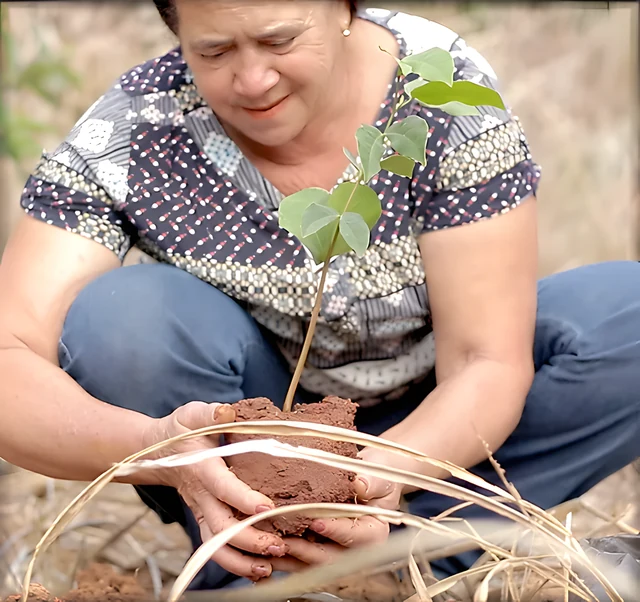
KMO talks with Danny Nemu about his efforts with an organization called RAIN, which stands for Regenerative Agroforestry Impact Network. They work to restore Brazilian landscapes which have been compromised by slash and burn methods which turn rain forest into short-lived agricultural patches which are soon depleted.
Open the formatted reading edition →
Reading edition · Published with KMO’s approval. Public. Covers the full recording: KMO’s introduction; the conversation with Danny Nemu (the Irreverend) on RAIN — Regenerative Agroforestry Impact Network — Brazilian agroforestry, spring restoration, Terena school partnerships, carbon offsetting and greenwash; the call to action (rainumbrella.org; Science Revealed and Neuroapocalypse); the Vault pitch explicitly naming C-Realm Vault episode 368; and KMO’s response to listener Ben from Ohio (Peter Zeihan, The Hill’s Rising, protests, Joe Rogan, Planet of the Humans, population, green-tech inputs) through the sign-off. Edited for punctuation, paragraphing, repeated words, fillers, false starts and obvious transcription errors. Speaker attribution is based on conversational context; no full audio listen has been done, and spots where the wording could not be settled are marked. Opinions and claims about Brazilian politics, agribusiness, carbon markets, protests and demography are the speakers’ own as of June 2020; they are not checked here.
KMOIf you speak the truth, have a foot in the stirrup. Hello and welcome to another installment of the C-Realm Podcast. I am your host, KMO, and this is episode number 560, “Brazilian Agroforestry,” with guest Danny Nemu — the Irreverend Danny Nemu — prepared for release onto the World Wide Web on Friday, June 5th, 2020.
So you may have heard there’s a big old forest, rainforest, down on that continent south of the one where I live. They call it the Amazon. I’ve been there a time or two. It’s a trip. But my guest on this hour has spent a lot more time there than I have and knows a lot more about what’s going on on the ground in terms of agriculture and the preservation of endangered species, and the changes to the way that the people who live there could inhabit the land that would improve their quality of life and do good things for so-called nature. We’ll say the local ecosystem.
This is the first part of a conversation. The longer part will be in the Vault, but the bit you’re about to hear is about 35 minutes, and I think I’ve said all I need to to set it up. So here’s my conversation with the Irreverend Danny Nemu.
KMOYou’re listening to the C-Realm Podcast. C stands for consciousness. I’m joined by Danny Nemu, otherwise known as the Reverend Nemu or Irreverend Nemu. Danny, welcome to the C-Realm Podcast.
DannyHi, KMO. How’s it going?
KMOHey, it’s going well. How are you doing?
DannyI’m very well, thank you. Happy to be back.
KMOHow’s the lockdown treating you?
DannyLockdown is fascinating. All kinds of things are falling apart. I’m trapped with my family and my wife, and yeah, it’s bringing lots of things to the surface which are due for examination. So on a personal level I’m kind of up and down, really, and generally just very, very curious just to watch where it goes and what’s happening with other people. You know, I’ve had enough, actually —
KMOYeah, I had had enough even before the pandemic started.
DannyYou’d had enough of what?
KMOI had been — I’d had enough of solitary existence. Okay: I live in a small — it’s actually a proper village — but I live in a part of it that is sort of secluded from the rest. I’m in this moat of concrete in a professional building. I’m the only person who lives in this building, and it’s not really easy to exit or enter this complex on foot, and I no longer have a car. And I was just getting ready to move to Puerto Rico when the coronavirus showed up and all plans are put on indefinite hold. So yeah, I was done with this lifestyle before it even started, and now the circumstances have encouraged me to give it another shot.
DannyYeah, I mean, I must say at the moment I’m longing for living alone. But —
KMOYeah, living alone is hard, and living with people is hard.
DannyIs there a third option?
KMOWell, yeah: dying.
DannyAlrighty.
KMOSo, you know, I think about you as an author who is interested in consciousness and who is also tuned in to the same, I would say, intellectual precursors that got me started on my current path — people like Terence McKenna or Robert Anton Wilson. What am I missing in that description?
DannyOh. Quite a bit, I assume. So far I guess one thing is what I’m doing with that. Yeah: so I spent a whole bunch of years writing books and doing talks on various aspects of kind of consciousness and psychedelics. For the last two years I actually put the trilogy on hold — so the third book is on hold at the moment — and I was working on a project called RAIN, which stands for Regenerative Agroforestry Impact Network. And that is an organization to fortify networks and stimulate agroforestry and reforestation in both Brazil and the UK. So I think that’s one bit which is quite exciting: the kind of work that I’m doing to try and get trees in the ground and regenerative techniques spread around a little bit more.
KMOWell, say more about that work. I mean — what’s the goal, what are the methods, what’s your role in it?
DannyYeah. So about — let me think now — about twelve years ago I was living in Brazil and I went to go and introduce myself to the parents of my girlfriend at the time, who was pregnant at the time, and her brothers took me swimming in a river, in a stream. And five years later, when we went back to visit them again to show off the babies — or the children by then — the stream had dried up, and all of the streams in the region are drying up. It’s a place called Chapada do Norte,1 which is in Minas Gerais in the south of Brazil. Yeah: there used to be four or five streams in this region; they’re all dying away. The river they feed is the Rio Araçuaí, which supplies the Cerrado2 — which is a big Brazilian biome — with water, and that’s dropping visibly year to year. You can see the effects of desertification and deforestation.
So in response to that I set up this organization, quite amorphous to begin with. And so the first thing we did was we took a bunch of conventional farmers to an agroforestry system — a well-established one. Just to be very brief: agroforestry is a way of growing food under trees with loads and loads of species in the same place. So it’s syntropic rather than entropic: it tends towards complexity rather than towards simplicity of a monoculture — like a big field of corn, for example, just one species. And if you get a bug which likes that species, we call it a pest or a plague because it eats it all. So agroforestry is resistant to bugs and plagues because if you’ve got loads of different species, then different insect species keep each other in check, and you get ladybirds in to eat the species and whatever. There’s a whole load of techniques to it, but it’s a high-yield, high-impact, high-employing way of working the land. It’s regenerative.
Slash-and-burn agriculture in Brazil is extremely damaging. You don’t get very many years off a patch of land, and you don’t get very much food out of a patch of land either. If you have a hectare devoted to cattle farming, for example, you’ll get something like one cow per year. And if you have a hectare devoted to monoculture soy you’ll get something like seven tons per year. And if you have a hectare devoted to agroforestry and it’s mature — which takes about eight years — you’ll produce something like forty tons of food per year, and it’s organic, and the harvesting season is longer, and it’s more varied. And for a whole lot of reasons it’s just a much better thing to do. And it produces lots of work and it produces lots of economic produce, because a lot of the problems in Brazil that are driving deforestation and driving desertification are economic: people can’t make a buck.
So yeah, that’s kind of where it started, and we’ve expanded into various directions.
DannyOne of the things we’re doing is we’re sponsoring schools to build sapling nurseries. So we got that region I was just telling you about: we built two sapling nurseries there with schools. One of them we also threw a course on how to build a sapling nursery, and people are going away and building their own sapling nurseries now. And like one of those people, for example, sold her two cows and is now reforesting the riverbank there, which is exciting.
We’re just on to our third spring restoration, because all the springs have dried up. So when you restore a spring you have to fence it off to keep the cows off — because there’s cows everywhere in Brazil, more cows than humans — and if you fence it off then the plants that you plant can grow back, because the cows don’t eat them, and the spring can develop into a spring rather than being trodden into the ground by cow hooves.
Yeah, so we’ve got that project there. We’ve got another geodesic dome in another part of the country, in Recife, which is on the coast — that’s an urban place. We’re also sponsoring conversion courses for conventional farmers who are interested in agroforestry. And so what we do is we’re providing communal machinery to make the process easier. And it’s not very complicated machinery: it’s just to break up the earth and to chip organic matter, because one of the things you do with agroforestry is you prune a lot. One square meter will produce between six to ten kilograms per year of prunings. And the reason you do that is varied, but for one thing you’re trying to maximize the amount of sun getting to the various different levels of the produce — so you’ve got the ground level, the mid level and the canopy level — and also if you prune it a lot it keeps the system in a high-growth state, kind of adolescent state, so the growth hormones are increased. You also, when you prune it, cover the ground. One of the things agroforestry is: you’re trying to protect the soil, increase the soil, and increase the soil’s organic life — all the little bugs in the soil, basically, which make it healthy.
So now we’re looking at — just before coronavirus kicked in we had a school in England which had just raised some money. They built their own sapling nursery in Bristol, and they raised some money for a sapling nursery on just on the edge of the Amazon. It’s a place which about twelve years ago when I was living there was pristine Amazon; now it’s all deforested. But there’s a school there which is also connected to a seed bank and also connected to a local women’s movement and things like that.
So we don’t really have one project. We have a network which puts together other projects, which is a way of collecting resources of people in England, people in the U.S., to send cash to Brazil and also learn about the projects they’re investing in. So it’s a distributed and decentralized peer-to-peer mutual aid network, if that makes sense.
KMOWell, it’s a mouthful, but I think I understand each piece of it.
KMOSo if you have a conventional farmer in Brazil that you want to reach out to and convince him, her, them to switch to regenerative agroforestry — what sort of products would the farmer have been producing prior to this interaction, and if things go well what will their yield be after they’re practicing agroforestry?
DannyIt depends on the region. But for example, if they’re cattle farmers — and a lot of people are cattle farmers — they will be producing just cows, basically. In order to reach out to these — it’s quite a, as you can imagine, quite a conservative demographic. It’s cowboys who’ve been doing their thing for quite a long time. And our partner on the ground: we’ve got a guy called Wender who is an agricultural — an environmental engineer — and he was finding that when he was — before RAIN got involved, before this international organization got involved — he’d managed to restore one spring in his town, which is called Cachoeira. Cachoeira means waterfall, and the waterfall is named after it — it was dried up in the 1920s. So his dream, let’s say, and some of the people in his town, is to see the waterfall flowing again. So he restored one spring which was on his uncle’s land, and he had to really fight with his uncle in order to get a small amount of land around it.
What we’re doing is: because we set up a nursery in the school, that means the school kids are going back to their parents — half of whom are farmers, because half the people who work in these areas are rural laborers — so they’re going back to their parents and they’re talking about the importance of hydrology and looking after, you know, reforestation and that kind of thing. And these parents are remembering the fact that their parents used to swim in these streams and used to talk about the great deal of produce. So we’re finding that through their children people are much more open to experimenting with it.
And what are they getting out of it? I mean, they can see with their own eyes that even the cow production’s going down rapidly, because you know you can’t produce anything in a desert, and that’s where they’re headed. So they’re getting out of it — this sounds a bit dramatic, but they’re getting out of it a potential for a future. I would say they’re seeing their children leaving because they can’t earn a living where they are. And another thing they’re seeing is the springs coming back to life, because agroforestry is very good at bringing springs back to life quite quickly.
One of the products, for example, that we’re looking at is honey, because the beekeepers’ cooperative in Cachoeira — in this town — they were the people who offered volunteer work in order to restore the springs. And obviously if you don’t have a riparian zone — if the riparian zones, if the edges of the rivers aren’t full of trees and flowers — the bees don’t have anything to eat, right? So it makes economic sense for the beekeepers to help us out. And if we can help them increase their honey production so that they can get onto a national market rather than just managing to sell to the occasional tourist who comes through the area, then they can get their industries going.
Another model is the CSA model. CSA is comunidade que sustenta a agricultura in Portuguese — community-supported agriculture — and this is kind of a box-scheme model where basically what you do is you pay a certain monthly fee and an agriculturalist, a small family agriculturalist, will produce a vegetable box and bring it to your house.
So our friend Danielle — he started an agroforestry system actually on just on the edge of a really degraded bit of land. It was a bit of land which had been used as a sand quarry, and the quarry had hit the aquifer, basically, so it was a man-made unnatural sand lake which was spreading and eroding the soil. So my friend Danielle started doing agroforestry a few hundred meters from this, and his neighbors thought he was crazy because they could see the land was getting eroded. He managed to secure the land because agroforestry is very good at securing against erosion — because you’ve got all the tree roots, and you’ve got various different techniques you use in order to do that — and now he’s producing literally hundreds of different species in this area of different edibles and non-edibles. And also, you know, you put things in which fix the nitrogen; you put things in which keep the bugs off. So that’s a really complex ecosystem. So he’s now selling his produce to people who’ve — you know, they’ve never seen some of the vegetables he’s bringing. These are traditional things which are eaten in Brazil. They call them in Portuguese PANCs,3 which is plantas alimentícias não convencionais — it means non-conventional edible plants. So these are the things out of the Brazilian tradition of foodstuffs which, as agribusiness expanded, kind of went off the menu. So they’ve got these old things that people’s grandparents have eaten that people are starting to eat again as well.
KMOHey, you mentioned the term riparian zone. Would you expand on that? What is a riparian zone?
DannyIt’s basically the edge of a stream, right? So around a spring, by Brazilian law, actually, you have to preserve the land around a spring up to a certain distance. It’s well less than a hectare. And so we are going onto land — we’re encouraging people to give us even more land than that, up to a hectare — so we’ll reforest around the spring. And in the riparian zone are the edges of the spring, the edges of the streams, and these are really important for a number of reasons. But one of them is that they make ecological corridors, because these ecosystems are fragmented, which means that wildlife and also the flora — the plant life in those areas — can kind of go extinct in a certain area. So if you have these natural ecological corridors, which are the waterways, it provides ways for animals and plant species to move between these different areas. That’s one reason why it’s important.
Second reason is that simply by planting one hectare of land, you filter — depending on the region — but you’ll filter something like three million litres of water into the aquifers per year, right? And obviously the closer to the water systems you are, the better. So by planting trees there, when it rains — and when it rains, it rains hard in Brazil — it secures the soil so the soil doesn’t wash away into the stream and then silt up further downstream. And it also secures the water: so the water, you know, it’s kept on the leaves, it’s kept on the branches, and it’s kept in massive quantities in the soil, and then it filters back into the river. So it acts as a kind of natural water-capturing device.
KMOSo in the, let’s say, conventional course of things, as a hectare of rainforest is cut down and either cattle are grazed on it or, you know, some commodity crop — maybe sugar cane or soybeans — is raised: because the trees were holding the soil in place, when the trees are gone the soil erodes after a few seasons and then it’s time to cut down some more rainforest and move the operation into that freshly cleared land. What happens — you know, if somebody doesn’t come in with regenerative techniques — what happens to the land that is now considered unusable?
DannyWith the introduction of cows and Europeans into South America they also brought over alpine grasses — Brachiaria — and so these species are very good at colonizing poor soils, the kind of thing you find in the Alps. So what happens basically if you overgraze a bit of land in the Amazon — or wherever, actually; we’re mainly active in the Atlantic Forest, which is further south, and they’ve already lost in some parts of Brazil — or 97% of the Atlantic Forest is gone. Minas Gerais, for example, is 97% gone. So in those areas, what happens is these grass species, invasive grass species, will take over and just basically nothing will grow — or nothing other than that.
And in some places, you know, if you look on the website — on the page which says reforestation — there’s an image of what a completely eroded landscape looks like, and it just looks like baked rock, basically, or super-compact earth, because the pioneer species can’t really get going. There’s no shade, right? So there’s nothing protecting the soil from the sun. And in these times when you’ve got the dry season extending and extending — you know, it doesn’t rain for months in Minas Gerais in some places — it’s very difficult for anything to survive.
So with agroforestry, what you’ll do is you’ll start with a series of species which gradually build up that soil. So the first thing people will plant often is rocket, and rocket expands accurately — it kind of covers the ground very quickly, which keeps other species out. And at the same time you’re planting that, you’re planting spinach, which keeps the sun off the rocket. And at the same time you’re planting that, you’re planting garlic, which is keeping the flies off the other things. And you’re also planting bananas — bananas are going to increase your amount of water because they’re very good at retaining water — and at the same time you’re planting papaya and you’re planting trees as well. And all these things contribute to the general soil health to accelerate that process which probably would happen anyway, a bit slower, but for the fact of these invasive species. And also, you know, the invasive species of the cow: if you don’t fence it off, a cow is going to come and eat it.
KMOSo the European grasses that can colonize these depleted soils — cattle can graze on those, right?
DannyYeah, yeah, they can. But you don’t get a lot of grass. You’ll get it kind of covering a little bit. But it’s not good, healthy grass. So even in cattle production, for example, there are agroforestry solutions to cattle production. One of them is just — it’s quite simple. You put what do you call this — macaúba,4 which is the macaúba palm. It’s, you know, the palm oil which is very famously destroying ecosystems in Indonesia — and, you know, you’ve seen those horrible images of orangutans fighting diggers in Indonesia — so that’s the African palm. But you’ve got the macaúba palm which is native to Brazil and Argentina. That produces palm oil as well. And if you grow that along with grass for cattle, you find that it doesn’t reduce the amount of food that the animals have — like it’s actually the opposite. The cattle will eat the leaves of this thing, and also it produces this palm oil which can be used for biofuel, it can be used for all the things that normal palm oil is used for — you know, chocolate and shampoo and all those kind of things. And in fact palm oil in agroforestry systems is higher yield than palm oil in monoculture systems, and that’s because the other plants which are there add to the nutrient mix which makes it more abundant.
KMOSo given the political situation in Brazil right now, I imagine that your values and worldview probably aren’t necessarily in sync with all the people that you encounter there. What sort of pushback do you get?
DannyThat’s interesting. Yeah, so like I said, when we’re working with the children of the people who are owners of the land, we’ve got nothing but — we’ve been very welcome. It’s really, really nice to see. And the political situation at a higher level in Brazil: you know, just I think last week there was a law put through Congress to strip the indigenous people of their land rights, and this has been a long battle which has been going on in various forms for, you know, a good few centuries now.
One of our projects is with the Terena indigenous nation. A couple weeks ago we just sent in some cash in order to build a sapling nursery in the south of the country. So this isn’t an Amazonian tribe; this is an Atlantic Forest tribe in the south of the country — biggest tribe in Brazil, actually, and also the first one to be subject to forced, let’s say, civilization. So these guys were — you know, they had cattle farming introduced, evangelical Christianity introduced; they even ended up fighting for the Brazilian army against Paraguay in the war against Paraguay. So anyway, these guys, under a former administration, they regained some of their traditional lands, right? So it’s still a very, very small amount of it. This is in Mato Grosso — which used to be — Mato Grosso means the thick forest of the south — so it used to be totally forested, and now if you look on Google Maps, Mato Grosso do Sul, it’s just absolute tragedy to see. It’s completely deforested. But one of the areas which is not so much is 2,090 hectares of reserve. And that’s where we’re active, one of the places we’re active. So 800 of those hectares they’ve taken back off cattle farmers and are regenerating it.
Now the current administration has just been usurping their land rights, basically. And for us this is a stimulus to act more quickly, because what we’re doing with that particular project — it’s got thirteen different villages, thirteen different aldeias, and each one of those aldeias has a school, like a primary school in it. And what we’re doing is we’re finding primary schools in the UK that will partner with these schools in these indigenous territories and other territories in Brazil which are not indigenous. Like I mentioned before, this Bristol school raised some money and they’re sending it off to this school in the Amazon. So we’re looking for partners — and these can be in any country — of schools that want to raise a small amount of money. And we’re talking about, you know, six, seven hundred pounds, which is about the same as $700 at the moment, in order not just to help them with building nurseries and reforestation, but also to amplify the cry for help from these regions. Because if mommies and daddies in Brighton, for example, hear about some indigenous tribe has had their land taken off them, that’s just news. But if they hear about the indigenous tribe which is connected to their kids — you know, and these people have done conference calls and these people have studied each other’s cultures — then that’s much more of a global — let’s say I want to globalize that insult; I want to globalize that struggle.
So in terms of, you know, the people who are against what we’re doing — you know, that’s big business; that’ll be agribusiness. There’s not really much they can do at the local level, right? They don’t like, for example — I mentioned someone who after attending one of our courses went back to her house and built her own nursery. She then got rid of the cows on her land. Right: those cows were not her cows; those cows were rent. She basically rented out a chunk of land — she rented out, you know, this fairly extensive piece of land — for eight dollars a month, right? So tiny sums of money. Yeah. So our, let’s say, our political enemies here can’t really do anything, I don’t think. The other thing is we’re looking at blockchain solutions which can move money around without having to deal with the Brazilian government.
KMOSo landowners who are leasing their land to conventional cattle operations really aren’t making much money from that, so it seems like if you were to get them started on agroforestry that it wouldn’t be very difficult to replace the income that they’ve lost.
DannyYeah, yeah, exactly. There’s a few complications. For example, a lot of that will be guaranteed — not so much the cattle, but say somebody is producing monoculture soy, for example. So a lot of the animal feed in the U.S. and the U.K. — I’m not sure what the situation in the U.S. is because they had a kind of a strange trade situation with Brazil — but certainly the European cattle feed and poultry feed, the vast majority of that is coming out of Brazil from the soy.
Now, yeah, so if — what’s the name of the company now, Bayer, the guys who used to be — the guys who bought Monsanto, I think it’s Bayer. They will sell you transgenic — they’ll send you modified seed — and if your crop fails, they will insure it, right? So that’s a kind of problem. They’ve got nothing to lose, the Brazilian farmers, by taking this seed — except for the quality of their land, of course — but in the kind of short-term financial-returns perspective they don’t have a whole lot to lose. So what we’re doing is we are installing demonstration plots — small agroforestry plots; some of them are in schools, some of them community groups, etc. — and this is a way for local people to see with their own eyes the incredible abundance of this way of working, and also the fact that it brings hydrology back to life, and also the fact that it employs a whole lot of people. So yeah, it’s a slightly slow process, you know. And you know, eight years you’ve got a mature system, so it’s not very slow, but the first couple of years need a little bit of support.
KMOAnd where does that support come from?
DannyWell, we’ve got some donors. We’ve got some individual donors — that’s what people go along and they just make a one-time donation, or they make a weekly, a monthly donation, or whatever they do. We also were sponsored by Breaking Convention, for example, which is a psychedelics convention — they gave us some money. We like various different benefit gigs, for example — people doing concerts at Christmas, that kind of thing. And on another level we’re looking at corporate sponsorship and that kind of thing. That’s kind of a bit of a complicated area, because a lot of the people that we’re working with — the Terena nation, for example, the indigenous nation — has been right at the forefront of the anti-what-was-called carbon colonialism. What they describe as carbon colonialism — and I agree with that. The carbon market, or the carbon-credits market, is a really — what’s the word I’m looking for — insidious market, where you know if you’re basically paying people in the Global South to plant trees in order that you can continue emitting large amounts of carbon into the air, now it doesn’t really have much of an impact.
So for example I was asked by an events company who were doing events for a big computer company — he said, can you offset our flights to Madrid and the carbon cost of sending an articulated lorry to Madrid? And so I worked out the costs and I said, well, this is how many trees need to plant and this is how we can do it and so on and so forth. But the fact of the matter is: the first nine years those trees are growing — you know, once they’re massive, though, you know, ninety years’ time, each one of those trees can store a ton of carbon, some of them — but it’s a very, very slow way of accounting for your carbon. And in fact, the timeframes that we’ve got, if you’re following the IPCC reports, you’re following research on Amazonian dieback and that kind of thing, we don’t really have a whole lot of time to be waiting for the trees to mature which are in the ground for these carbon-offsetting projects.
So we are looking at corporate assistance. We have had a little bit of help here and there from corporations, and there’s some really interesting potentials. But we don’t really want to be getting involved in greenwash and getting onto the carbon-credits market.
KMOYeah, it seems fanciful — I guess is the politest way to say it — that if you are traveling a lot for business and basically just create — you have a large carbon footprint — that you can make an additional purchase and offset the harm that you do with all of that travel. Yeah, it seems rather convenient, although to my mind unrealistic.
DannyYeah. I mean, here’s the metaphor I used actually with this guy who said can you offset our carbon — there’s a really involved project — and I said, well, yes I can; really you’d be better off taking the train to Madrid. And I gave him the following metaphor. I said: imagine a man sitting in the bath and the hot-water tap is on full and it’s getting unbearably hot. Now rather than turn the hot-water tap off, what he does is he shouts down to his wife, can you stick some ice cubes — can you take some water in the freezer so I can use the ice cubes to cool down my bath when they’re done? And that’s kind of the situation with offsetting your carbon costs.
And now you’ve got like EasyJet and you’ve got all these companies which are now being bailed out by our government for all the losses that they’ve taken during coronavirus. You know, these guys are well into offsetting. In the Kyoto COP meeting, this was the conclusion by all the esteemed guests: that yeah, we really need to do offsetting; that’s going to save our environment. And it’s quite similar to the medieval Catholic indulgences system: you know, you do your sin and then you pay some money and we build a cathedral somewhere and we feel good about ourselves.
KMOYeah, and you get a free pass for your sins.
DannyYeah, yeah, yeah, exactly. And in fact — I mean, and the whole industry is spectacularly fraudulent as well. I mean, it has got this fundamental error at its root, but then on top of that it’s also just full of fraud. I mean, something like one third of the projects are found to be fraudulent, you know. And you might, for example — an offsetting scheme, and there are offsetting schemes where someone will plant a timber forest and then that will go into, let’s say, cheap furniture, bookcases, which might be around for, you know, ten, twenty years, and it ends up in landfill — that’s going to be releasing all that carbon again, right? You also find what’s called additionality: often that timber forest would have been grown anyway, and then someone’s come along and said, hey look, we can get some cash out the carbon market — oh great, well let’s do that — and then nothing at all is being added. So there’s a whole lot of problems.
What we’re trying to do — what we are doing — is to do a much more holistic ecosystems and economic-systems approach where, you know, the impacts that our projects have are, as I said, on hydrology, on community resilience, resistance to flooding, resistance to drought, resistance to plagues and pests, and local-economy boosting as well.
KMOWell, I would like to invite you to join me in the C-Realm Vault for a more wide-ranging conversation. But before we do that, this is the call-to-action phase: tell people about your projects, where they can find out more about you, how they can get involved.
DannyThank you very much. Well, you can find out about RAIN at rainumbrella.org, and you can make a donation there if you like. You can check out what we’re doing. You know, if you’re a company that wants to be involved in regeneration, there’s all kinds of things that companies can do in order to be on that. And in fact we’re talking to a filmmaker who’s just made a film called The Tipping Point — check her out, Chelsea Greene5 — and another film called The Lost Tribes of Borneo. She’s looking at producing a film for CEOs about how businesses can be regenerative — you know, not just as a kind of greenwashing make-us-feel-good-about-ourselves way, but actually really, really helping regenerate.
And since you’ve given me the opportunity to give myself a shout-out, I’d like to mention the fact that I’m also a writer of books. And my first book has just been re-edited; that is called Science Revealed, and it’s on a completely different subject. That’s about the place of revelation in the history of science. I’m looking at scientists who have discovered things in trances or on psychedelics or discover things when they’re just waking up. So I’m looking at like mathematicians who’ve come up with these crazy formulas which are still being unpicked a hundred years later, opened up whole areas of chaos maths — looking at Kelvin and looking at Kekulé and looking at Ampère and a whole load of scientists who really built — Tesla is another one — who really built the modern world, and how their ideas did not come to them by kind of calculation and tapping on computers but through the process of revelation. So that’s my first book; it’s called Science Revealed, and it’s just been, you know, just re-released a couple of weeks ago.
And then my second book is called Neuroapocalypse, and that’s looking at the science of revelation — the neurobiology, linguistics of revelation: you know, what happens in our minds when we discover things, and what potentials human beings have when they overcome the various different filters which keep us from an apocalypse, really. All my books are about the apocalypse. And apocalypse — Neuroapocalypse — the word means to remove a veil or to lift a veil. So it’s the same word as revelation in terms of its etymology. So check out those things as well: Science Revealed and Neuroapocalypse by the Reverend Danny Nemu.
KMOAll right. Thanks so much.
DannyMy pleasure.
Program IDYou’re listening to the C-Realm Podcast with your host, KMO.
KMOThat was the Reverend Danny Nemu. Most of my conversation with Danny is in the Vault. And, you know, obviously, this is the part that I had to put on the main C-Realm podcast, because, you know, we want to raise awareness of his efforts, and the issues that underlie those efforts — you know, the environmental pressures, the economic pressures, the sociological pressures that all press people to do things which, you know, are beneficial to them in the short term, but harmful to themselves and their communities and, you know, the natural world in the long term.
But what Danny was talking about there at the very end — you know, he was describing the subject of his books: the apocalypse, science, non-ordinary states of consciousness and how they feed back into science. These are topics that we address in the Vault portion of the conversation. And whereas the portion you just heard was mostly me asking questions and Danny answering, in the Vault it is much more of a back-and-forth discussion. So that will be C-Realm Vault Podcast episode number 368. And let me just throw in a pitch for the Vault here. If you were to follow me on Patreon and pledge at that $7 a month level, you would gain access to the C-Realm Vault Podcast. And if you’re doing it for the first time or the first time in a long time, that $7 is going to get you access to many, many, many hours of programming — programming that I suspect you enjoy. So give it a go. Or, you know, don’t.
KMOAll right. So now I think to round out the episode, I’m going to share and respond to some feedback from Ben in Ohio. Ben writes:
Hey, KMO. It’s Ben from Ohio. Wrote up my hot takes from your recent episodes and wanted to pass them along. I went out and got the audiobook of Zeihan’s Disunited Nations after you started talking about him. Much to my chagrin, he waxes poetic about his time at Stratfor in the introduction. I have a very hard time taking anything associated with Stratfor seriously.
KMOSo Stratfor was a — is, it’s ongoing — a strategic forecasting advisory group, and it is headed by George Friedman. So there is a lot of George Friedman in Peter Zeihan’s subject matter and presentation. I mean, I know they have differences of opinion, but it’s the same sort of thing. These are my words; now going back to Ben’s words. Ben continues:
I’m going to plow through it mainly because it is interesting to see what those who are or try to be one step outside the establishment are talking about. However, the way he makes pronouncements backed up by superficial generalities strikes me as too Thomas Friedman / The Economist-esque. All of them should feature more information from Philip Agee, William Blum, Noam Chomsky, Amy Goodman, and John Perkins before expositing on U.S. “Order” with a capital O. Hell, I’d be satisfied with a little more influence from Gore Vidal. Now, there’s someone I’m truly happy passed before Trump won the 2016 election. Mark Ames, Matt Taibbi, Arundhati Roy, and Vandana Shiva are also voices that resonate with me more than Zeihan’s at this point.
KMOWell, yeah, the list of writers and thinkers that you’ve named there are very bottom-up, vox populi, sort of from-the-grassroots-up kinds of people. And Peter Zeihan is definitely — I mean, his whole narrative is definitely very, very friendly to the top-down, you know, power-centric segments of our society. Basically, he gets paid to go and give these speeches where he tells people — you know, people in powerful positions — that everything’s going to be okay, at least if you’re in the U.S. or in, you know, one of the five key U.S. allies in the coming post–Pax Americana world.
But Ben, if you had written to me and asked me which Zeihan book I would recommend, it wouldn’t have been Disunited Nations. I definitely liked his middle book best, The Absent Superpower. I found Disunited Nations — it’s basically a third pass on the same subject matter. And so he just drills down in excruciating historical detail on — I mean, I’m into historical detail; I’m all about historical detail — but the more of it you pile on, the more you have to struggle to really keep your narrative accessible and flowing.
But Ben continues:
So that was a bit of a miss. However, I do need to thank you for turning me on to The Hill’s Rising show. It’s very well done. I wish Krystal and Saagar, or people like them, would comprise whatever people are getting for their local news instead of the current Fox slash OANN foulness —
KMOI don’t know what OANN is.
— and the big three slash CNN dreck. One thing about Rising, though, is that I find the quick-hit slash produced-for-YouTube mode of presentation really jarring. I wish it was presented more like Democracy Now. I know it makes me a bit of a dinosaur. Since I’m middle-aged, it makes me wonder how people who consume content in the old broadcast-slash-cable-news format will ever be reached. I think it’d be much better for the world if we could bring some boomers and oldsters back to some semblance of reality rather than have to wait for them to die off.
KMOYeah, I hear you. Here, my curiosity’s gotten the better of me. I’m looking up OANN, One America News Network, which according to Wikipedia is a conservative far-right news and opinion channel. Huh. This is not a point of personal identity or bragging; I just have to remind folks from time to time: I don’t have a TV. I mean, plenty of scripted and unscripted TV-style programming makes it to my eyeballs, but it’s coming through a, you know, a laptop or a tablet or something. I just — I’ve been without a TV for so long, I wouldn’t even know how to hook up a new TV. I mean, I’m sure I could figure it out, but I just don’t miss it. There is so much programming and information to take in. The TV is just not necessary for me.
So Ben wonders, you know, how people who consume content on the old broadcast cable news networks — you know, on their TV — how they can ever be reached. Well, the way to reach them is to convince the powerful to be honest, to drop their ugly, divisive, propagandistic dictates — the marching orders that they give to their employees and their media companies. What would make them want to tell the truth? Well, it’s got to come down to self-interest. You don’t get to be rich enough — you don’t get to be Mike Bloomberg — by neglecting your self-interest. And let me tell you: rioting in the streets, breaking windows — that does not frighten the powerful. It frightens suburban middle-class people who just like stability. It doesn’t frighten Mike Bloomberg. It doesn’t frighten Jeff Bezos.
And, you know, not to get conspiratorial on you, but I watched some YouTube videos where in places where looting was likely to take place — shopping areas, high streets — on the day after George Floyd was killed, you know, people with their cell phones and their camcorders, they’re recording just walking up on pallets of bricks sitting in the street or on the sidewalk with no construction going on anywhere in the vicinity. Somebody with resources put pallets of bricks in places where protests were going to be taking place. And once again, I mean, we see it over and over and over again. I first saw it in Seattle in 1999 with the WTO protests. You have peaceful protests going on, and then the assholes, dressed all in black, show up and start breaking windows and throwing things at police, and the police respond indiscriminately against everybody.
I have zero patience for people who want to hold up the black-bloc Antifa thugs as some kind of heroes. It’s so amazing to me that people actually make the argument. They say Antifa are anti-fascist. If the name claims that they’re fighting fascism, then it must be true. And fascists are bad. So somebody whose identity is based on fighting the bad people — they must be the good people, right? It doesn’t matter what actions they take. They’re the good guys. No, they’re not the good guys. I’m not going to make a broad-brush generalization about everybody who’s ever participated in that sort of activity. But in general, in my opinion, what they do is harmful and what they do makes social tensions worse. Now, maybe you’re an accelerationist and you think whatever we can do to make the pressure harder, to make people suffer more, is going to bring on the revolution. I think that’s crazy talk, personally.
KMOBut moving on with Ben from Ohio’s feedback. Ben writes:
But I guess Joe Rogan is the new mainstream media.
KMOAnd I’ll just pause there and say that yesterday, Krystal Ball and Saagar Enjeti were the guests on the Joe Rogan podcast. Ben continues:
The extent to which the influence of podcasts have risen in general is inspiring. One interesting quote from that article, which dovetails with what I’ve been saying recently —
KMO— and he’s making reference to a linked piece about Joe Rogan and his move to Spotify. It’s a New York Times story, and here’s a quote from it:
“When you have something that can’t get canceled, you can be free.”
Like you, I find myself quite frustrated with the contemporary left and its cancel culture in the U.S. They espouse identity over class and economics and get creamed every time. I also have no use for the Democratic Party — haven’t since Nader and LaDuke — but will also never associate with the Republican Party. Since things are getting increasingly untenable, I wonder if entirely new parties are going to spring up, or if there will be collapse and re-bootstrapping of one or both of the mainstream ones. They’re disassociated from reality, or too associated with the preposterous few, and the situation of the restless many is untenable and growing worse.
Fun fact from someone who is non- or post-partisan living in Ohio: I don’t get to vote for judges. When one declines to state a party affiliation, you get an issue-only ballot. I can understand, but not condone, not getting to vote for legislative and executive officials for political parties I’m not affiliated with during primaries — but judicial? This and so many other things crop up when one steps outside from the Democrat–Republican party line. It’s exasperating.
KMOYeah, I hear you. I should do a show on what the Constitution has to say about political parties. You know what? I can do that show in two seconds. Nothing. The Constitution says absolutely nothing about political parties. And yet the Democrats and the Republicans, they get together and they decide who gets to appear in presidential debates. They get to decide what the criteria is for somebody’s popularity, their polling numbers, whatever, for them to appear on stage. And they could adjust those priorities and those criteria from one debate to the next to open the door for favored candidates — favored by the party insiders, by the media, by the political string-pullers, but not favorable enough with the general populace to be doing well in the polls. And then people who qualify, you know, according to the rules of a previous debate — if you don’t like them, say Tulsi Gabbard — you can lock them out by changing the rules for the next debate, and just tailoring the rule changes specifically to keep out the candidate who is bringing in talking points which are not allowed.
KMOBen from Ohio continues:
Switching tacks. Before any of your Planet of the Humans-related content came out, I knew you were going to bring it up. Thanks for doing so.
KMOI’ll just pause here and say I only brought it up because Saagar and Krystal brought it up on Rising, you know, and they had the filmmakers on the show. Planet of the Humans might have slipped under my radar otherwise.
KMOBen continues:
It’s really hard for me to dispassionately analyze works with Michael Moore’s imprimatur. I was born in Michigan, have family in south-central and southeastern Michigan, and witnessed both the unhealed aftermath of the race riots of 1968 and the complete abrogation of any notion of community responsibility and quality by Detroit’s car manufacturers in the name of concentrated economic returns. I was the first person in my family to purchase a Japanese car when I got my first job, a Honda Civic. It was a big deal at many subsequent family gatherings. How could you not have bought American, was the question. Because the Japanese car doesn’t suck, was my response. Yet I was very frustrated by making the choice that I did. The way Moore documented how things became untenable for those who depended on the car manufacturers in Roger & Me resonates to my core being. Moore deserves a lot of the criticism he gets, but I think we’d all be better served by careful examination of the underlying messages and not get tripped up in superficialities, which connects to my frustration with Zeihan, I guess.
To your point that this movie would not have been paid any attention without Moore’s name on it, I guess so to some extent, but Jeff Gibbs has such a long-standing relationship with Moore, and it was Gibbs’ first film after working with him for so long, how could he not have associated his name with it? Again, I fault Moore for many things, but finding a way to release content he cares about while taking good advantage of our contemporary situation and his platform is not one of them.
The two core messages in the film that interest me are: one, green technology requires industrial inputs; and two, human population may have a lot to do with our current troubles.
KMOLet’s take the population point first.
Since it’s come up again in your recent work, you correctly point out that the birth rate is lower than the replacement rate in many countries, but those countries have all traversed the industrialization curve to some, and many a greater, extent. I was concerned that earth systems couldn’t cope with China and India industrializing the way we did. Yet here we are. You also point out that birth rate is still high in areas which have lagged on the industrialization curve. But what are the limits to growth? And why don’t we try to address them given our comparative advantages?
KMOWell, I guess your final question there depends on who you’re identifying as “we.” Why don’t we try to address them? Many people are trying to address basically every challenge that African countries and African people are struggling with. But then other segments of “we” — oil companies, the mine-to-jewelry-store diamond pipeline — there’s money to be made by doing damage: damage to the people, damage to their culture, damage to the natural environment.
Although I’ve been reading books recently — or I should say, listening to books on audio, or audiobooks — on the topic of population. I’m reading one right now called The Human Tide. And things are improving quickly in many parts of Africa. Many places still have a long way to go, but there are a number of factors that are contributing to falling birth rates all over the continent. And possibly, you know, nothing is contributing to birth rates more than the smartphone. When you give women who traditionally have not had control over their bodies, have not had any say over how many children they have, have not really had recourse to any sort of reliable birth-control method — when you give them some measure of autonomy, and particularly when you give them education and access to capital, they have fewer children, even if they’re living in the country. Now, if they come to the city, even without much education or any access to capital, they’re going to have fewer children because it’s very expensive to have children in the city, whereas in the country, they’re free labor.
So rapid population climb comes from extending lifespans and diminishing child mortality. And there’s a little bit of lag in people’s understanding of their world. People in poor rural societies have a lot of children because many of their children will die. And because there being no official social safety net to speak of, there’s not going to be any pension, no Social Security — I mean, if you’re going to live into old age, you are going to need some children to help you out. But once lifespans extend and child mortality falls off, well, there’s typically a generation where people don’t quite feel secure with the new situation yet, and they’re still having a lot of children because it is a, you know, a self-preservation tactic. But then people soon realize that kids are expensive and, you know, the reasons for having them don’t obtain anymore.
But more than anything, giving women just a basic understanding of, you know, reproduction — how it happens and how to keep it from happening. When they have that information, they have fewer children. And nothing gets that information out to them better really than popular entertainment that shows, you know, women living lives which are much more interesting than the farmer’s wife having baby after baby after baby. Those popular soap-opera-type entertainments show women that, you know, there’s a life to be led that doesn’t involve having a lot of children, and it’s a much more interesting and glamorous life than the one they’re living. But also the smartphone, which is not a one-way conduit of entertainment programming with some embedded population-control messaging in it, but it is a two-way medium where they can search for information, where they can follow chains of ideas and share the better sources of information they find with other women — women they know, you know, in their local community, and women who they will never meet.
And this is a point made by the authors of the book that Justin Ritchie recommended to me. The book is called Empty Planet. And, you know, we’re not looking at a planet devoid of human beings anytime soon, short of nuclear war or enormous gamma-ray burst or supervolcanic eruption or, you know, any of the things that can scrape the complex life forms off the surface of the Earth. But as countries like Japan are learning, when you fall below replacement rate, your population gets older and you get this unbalanced demographic profile for your society and genuine economic and social hardship result. And I’m really interested right now in how, as a technological civilization, we are going to adapt to this demographic imbalance, which is not hitting all countries to the same extent at the same time.
And a point made by the authors of both of the books that I’ve mentioned — The Human Tide and Empty Planet — both sets of authors agree that the countries that fall below replacement rate and have a fixed notion of their cultural and racial identity such that they do not allow immigration, they will suffer much more than countries like the United States and Canada, which welcome immigrants. Now, you might say that the United States is not welcoming to immigrants these days, but you’re simply wrong about that. You are simply mistaken. You are believing propaganda. The U.S. accepts a lot of immigrants and we are the better for it.
Okay, that was a little long for a side commentary within the reading of a single email. So backing up a little bit to preserve the flow of Ben’s last two paragraphs, he writes:
The two core messages of the film that interest me are: one, green technology requires industrial inputs; and two, human population may have a lot to do with our current troubles. Let’s take the population point first. Since it’s come up again in your recent works, you correctly point out that the birth rate is lower than the replacement rate in many countries. But those countries have all traversed the industrialization curve to some, and many a greater, extent. I was concerned that earth systems couldn’t cope with China and India industrializing the way we did. Yet here we are. You also point out that birth rate is still high in areas which have lagged on the industrialization curve. But what are the limits to growth, and why don’t we try to address them given our comparative advantages? I’ve loaded that question. The book Limits to Growth has been mercilessly attacked since it came out, much like The Population Bomb —
KMOLet me just pause there and say both The Limits to Growth and even more so The Population Bomb may have been mercilessly attacked, but they also sold gobs and gobs of copies. Paul Ehrlich is a very rich man. You’re never going to go broke telling middle-class white people that they should be afraid of a black planet. Back to Ben’s email. Ben writes:
I’ve loaded that question. The book Limits to Growth has been mercilessly attacked since it came out, much like The Population Bomb, which I have not read and did not retain in my mind as much as Limits to Growth. The attacks on Limits to Growth also parallel against Planet of the Humans in some ways. It’s not enough to say, but the costs of renewable tech have come way down since this was made. I’m risking turning you into a straw man since you’re well-informed and have a nuanced response to this movie, but yet I’ll continue. Even if the costs have come down, better energy technologies still depend on inputs and the organization of those inputs. Our government has been captured by those who do not want the inputs or their organization to change. The prosperous few who have lightly captured the government also set up or co-opt legitimate opposition to facilitate their continued returns. See the extent to which Bill McKibben was taken down in the movie. All of this gets in the way of discussion about what we really should be doing, which, though heavy-handed, is what I think Gibbs is trying to say here. I wish we could have designed, built, and sold better and more sustainable technology here in the U.S. and imported it rather than arms, aircraft, and software. I could go on, but I’ll spare you. I wish you well with your transition to Puerto Rico, if it’s able to get started soon. I’ll continue to be an avid listener here in Ohio. Be well, Ben.
KMOWell, Ben, thank you very much. Google suggests three responses: “Thanks for the feedback!” “Thanks for the feedback.” And “Thanks!” And I’ll send you all three with a smiley emoticon — or I guess emoji these days. And, you know, for the boomers out there who are not hip to the difference between an emoji and an emoticon: an emoticon is a face or a little picture that you make by typing characters on your keyboard. You know, like colon and close parenthesis is a smiley face. That’s an emoticon. An emoji is a little graphical image. And it could be a smiley face. I mean, for every emoticon, there is an emoji. Actually, there’s a whole slew of emojis. But that is definitely far from any of the points that Ben raised in his excellent email.
KMOBut back to the first point that Ben raises about the film Planet of the Humans: green technology requires industrial inputs. Yeah. Yeah, it does. Does that mean it’s not worth doing? I really like gardening. I like keeping chickens. Can’t do it here in this apartment that I live in. But these are quality-of-life things for me. I don’t believe for a second that me growing some tomatoes in the summertime is having any impact whatsoever on issues of climate change or destruction of habitat or the acidification of the oceans or concentrations of atmospheric carbon. Gardening produces some very local, very fresh, very tasty food, and it is, from my perspective, a wholesome, relaxing, enjoyable activity. But I’m not pining for a world in which, you know, we don’t have tractors — or a world like, you know, at the beginning of the United States where three out of four people were farmers. Middle-class white would-be saviors of poor Black people are always trying to get them instituted in gardening. And, you know, for Black people, working the land doesn’t have the same wholesome frontier, rugged-individualistic, you know, moral value that it does in the imaginations of a lot of white people.
Green technology requires industrial inputs. Yes, it does. But so does basically everything that makes modern life possible. And while I certainly have criticisms of, you know, the way we as a society — you know, as a global society — or the way the United States utilizes resources, and in so many respects, you know, squanders them, or applies them to things that would just be better left undone — at the same time, here I am speaking to you through a microphone and I’m going to edit it on my laptop and I’m going to put it up on an RSS feed and you are going to listen to it and you are listening to it right now. And you, you know, right now, basically your thoughts are being guided. But as soon as I stop talking, you’re going to take the baton and take it further. Except for my actual speaking words and your actual listening, everything else in this process depends upon industrial inputs. And yeah, there are rare-earth elements in my laptop computer. Some of them probably sourced from places where, you know, there’s no prohibition on child labor, where the people who are actually digging the materials out of the ground are treated very badly, paid very little. And yeah, I would pay more for my computer if I honestly thought that paying more would eliminate those sorts of practices. But on the whole, the fact that my microphone, my laptop, they contain rare-earth elements and they partake of cheap Chinese labor, which is exploited, but which is also generating enormous wealth and an enormous increase in quality of life in China — the mere fact that these are products of industrial technology and industrial civilization, to me, in no way diminishes their value. And that’s not evidence or reason all by itself to say we should stop using computers.
And, you know, as you certainly know, if you’ve been listening to this podcast for years, you know I have serious concerns about machine learning and artificial intelligence. And yet, at the same time, I’m not about to lead the Butlerian Jihad against the machines. Yes, they serve as tools of social control and surveillance and oppression, but they also serve as tools for communication and, you know, creative self-expression. And as time goes on, they do more with less. Think about the first computer you ever owned. What was it? Was it a Macintosh of some kind? Was it an IBM — what we used to call IBM clones; now we just call them PCs? Think about how much material went into it and how much electricity it ate compared to your smartphone. And now think about how much more capable your smartphone is than that first computer. That process, which for better or worse Jim, our ad attacker, called ephemeralization, is ongoing. It hasn’t run its course. It is still happening. Homo technologicus — you know, technology-using humanity — we’re getting better and better at doing more and more with less and less. We’re still profligate. We still squander the resources that, you know, that we depend on and which are limited, but we’re learning. And that learning process isn’t over.
You know, Charles C. Mann, the author of the books 1491 and 1493, and then more recently The Wizard and the Prophet — he talks about two psychological types, two mentalities when it comes to, you know, the relationship of humanity and human civilization to the earth. Prophets are people like — you know, you’ve heard many a prophet here on the C-Realm Podcast — prophets are people who say, we need to have less of an impact on the earth. We need to tread more lightly. We need to decrease our impact on the environment by doing less. And the wizards are the ones who say, no, we need to get smarter about what we’re doing so that we can provide better for people. We need to create more abundance with our ingenuity. And Charles C. Mann says, you know, he alternates. He’s a prophet on Monday, Wednesday, Friday, and he’s a wizard on Tuesday, Thursday, and Saturday, and he alternates every Sunday. I am more in the wizard camp these days than I am in the prophet camp. I think I gave the prophet mentality a fair shake — like the better part of a decade. But at this point, I’m largely over it. Not 100% over it, but largely over it. I think we need to keep getting smarter, keep learning to do more with less, and produce abundance for as many people as we can. I’m not saying we should create as many people as we can, but given the people who are here already, we should create abundance for those people.
And I’ve just grown a bit of an allergy to what Bruce Sterling calls hair-shirt green, particularly when the hair-shirt green is preached by fabulously wealthy people who live lives of extreme opulence, who go to environmental conferences on islands in the Mediterranean where they have a fleet of Ferraris ready to whisk them around the island for sightseeing tours. And I can completely understand anxiety over, you know, the potential consequences of the inhabitants of China and India coming to live like the inhabitants of the United States. But at the same time, I don’t think there’s any morally justifiable argument that can be made for saying that they’re not allowed to do it. We’ve got ours. And even though you’ve got the means to get yours, you can’t because we can’t live with the consequences.
KMOAll of which leads me in the direction of politics. And rather than make that transition and segue into a political rant, I’m going to stop. I’m going to bring this episode of the podcast to a close. You know, there will be more. And for those of you who are subscribed to the C-Realm Vault Podcast, there will be more very soon. I know I’m not going to get it posted today, but I’m going to do my darndest to get the next episode of the C-Realm Vault — episode number 368 — posted tomorrow. And with that statement of intention, which falls a little bit short of a promise, I bid you all safe passage. Stay well.
1. As spoken in the ASR as “Chaparro de Norte” / “Chaparro”; settled as Chapada do Norte (Minas Gerais) from context and common place-name. Marked for optional audio confirmation. ↩
2. ASR heard “river ala soyee” / “cejado”; rendered as Rio Araçuaí and the Cerrado. Place/hydrology names from context; not audio-verified. ↩
3. ASR heard “punky” / “planters alimenticias”; rendered as PANCs (plantas alimentícias não convencionais). Common Brazilian agroecology acronym; not audio-verified. ↩
4. ASR heard “makauba” / “Macau palm”; rendered as macaúba (native Brazilian oil palm). Not the African oil palm discussed in the same turn. ↩
5. Filmmaker name heard “Chelsea Green”; rendered Chelsea Greene with residual uncertainty — may be a different spelling. ↩
Keep following the conversation.
Also with Danny Nemu
Members or episode access required
Another public conversation
Public audio available
Another public conversation
Public audio available